
Regenerative Wool in Knitwear for Autumn Winter 2026
By the DENISA teamPublished 6 min read
Quick answer
- Regenerative wool improves soil health and biodiversity through better farming methods.
- It creates stronger, longer-lasting knitwear with the same cable and roll-neck appeal.
- Conscious shoppers get durable, warm pieces that support ethical land management.
- Look for it in roll necks, cardigans and textured knits that layer easily.
Regenerative wool is appearing more often in the knitwear collections planned for autumn winter 2026. It is used for cable knits and roll necks because the farming methods behind it help restore soil, support biodiversity and produce fibre with good strength and softness. For conscious consumers this means pieces that feel luxurious, wear well and align with a more thoughtful approach to fashion.
The shift is practical. Regenerative practices aim to leave the land in better condition than they found it, which can lead to wool that has natural resilience. This suits the structured textures of cable knits and the snug fit of roll necks that many of us reach for when the temperature drops.
What Is Regenerative Wool
Regenerative wool comes from sheep farms that follow practices designed to improve soil health, increase carbon storage and encourage wildlife. Farmers rotate grazing areas, avoid overgrazing and sometimes plant cover crops or restore wetlands. These steps go further than standard organic rules by actively rebuilding the ecosystem rather than simply maintaining it.
The resulting fibre tends to have good staple length and strength. This makes it suitable for the yarns used in chunky cable knits or fine rib rolls that need to hold their shape after repeated wear. It is not a marketing label but a description of land management that can be verified through farm audits and soil testing.
Why Brands Are Choosing It for AW26
Autumn winter collections are leaning towards richer textures and layered looks. Cable knits and roll necks provide warmth without bulk when made from quality wool. Regenerative sources give brands a way to meet demand for these styles while addressing concerns about the environmental impact of conventional wool production.
Soil health improvements on regenerative farms can lead to better water retention and reduced need for synthetic fertilisers. This appeals to shoppers who want their knitwear to come from systems that support long-term land care. For AW26 the fibre also pairs well with the military detailing and metallic touches that are moving through broader trends, creating contrast between soft knit and structured tailoring.
Benefits for Conscious Consumers
Choosing regenerative wool knitwear gives you pieces that are made to last. The fibre’s natural crimp helps it resist pilling better than some lower-grade wools, so your roll neck or cable knit keeps its neat appearance after several seasons. This reduces the need to replace items frequently.
There are also wider gains. Healthier pastures support more diverse grasslands, which in turn help pollinators and bird populations. Consumers who care about the full story behind their clothes can feel confident that their purchase supports farming that aims to improve rather than deplete the land. The warmth and breathability of wool remain unchanged, so the practical performance you expect is still there.
Durability in Daily Wear
Well-made regenerative wool holds its shape after washing when cared for correctly. Cable patterns stay defined and roll necks keep their snug fit rather than stretching out. This makes the investment worthwhile for items you will wear often from October through to March.
How It Compares to Conventional and Recycled Wool
Conventional wool can come from farms with intensive grazing that sometimes leads to soil compaction or loss of plant variety. Regenerative methods actively reverse some of those effects. Recycled wool, while useful, is often blended with other fibres and may not offer the same loft or warmth as virgin wool from regenerative sources.
Both have a place. Yet for glam knitwear that relies on beautiful stitch definition, regenerative virgin wool currently delivers the texture and drape that many favour. It also avoids the shortening of fibres that happens during mechanical recycling, so the knit feels softer against the skin.
Styling Regenerative Wool Knits for Autumn Winter
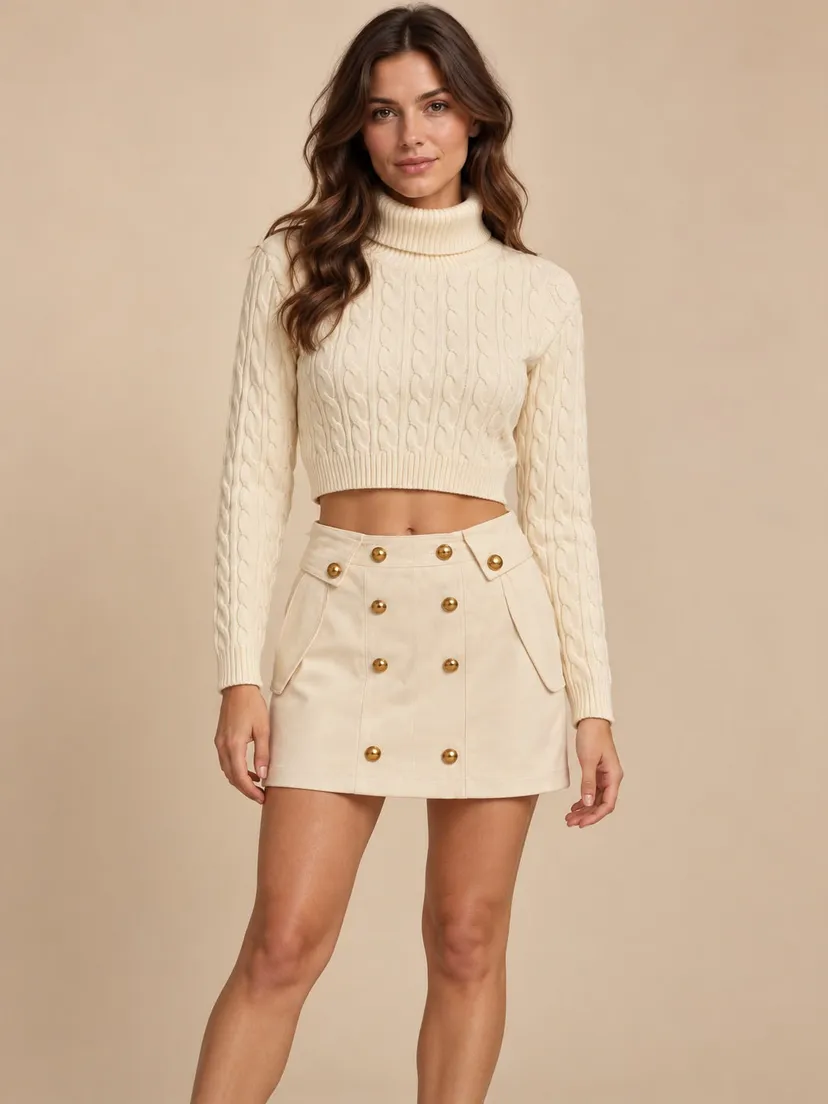
A cropped cable knit roll neck works well with high-waisted styles. Pair the Cropped Cable Knit Roll Neck Jumper with the Ivory High Waist Pleated Wide Leg Trousers for a clean, elongated silhouette that balances the cropped proportion.
For a military edge, layer the Military Rib Knit Zip Cardigan over a simple blouse or under a tailored blazer. Its ribbed construction and zip front make it easy to throw on over dresses or co-ords when you need extra warmth without losing polish.
Explore more options in our Knitwear category or build complete looks with Sets & Co-ords. These pieces layer comfortably and move with you from office to evening events.
Roll necks also sit neatly under wrap dresses or blazer dresses when you want coverage on colder days. The natural stretch of quality wool lets you move freely while the fibre regulates temperature, so you stay comfortable whether indoors or out.
Caring for Your Wool Knitwear
Good care keeps regenerative wool looking its best. Wash on a cool wool cycle or by hand in lukewarm water with a detergent made for wool. Avoid fabric softener as it can coat the fibres and reduce their natural performance.
Lay flat to dry rather than hanging, which can cause stretching. Store folded in a breathable garment bag with cedar or lavender to deter moths. Our guide on how to store knitwear and prevent clothes moths offers more detail on keeping your pieces safe over summer months.
Spot treat small marks instead of washing after every wear. This preserves the fibre’s natural oils and extends the life of your cable knits and roll necks. With proper care a well-made regenerative wool jumper can become a wardrobe staple that lasts for many winters.
What to Look For When Shopping
Check for clear information on the farm practices or certification behind the wool. Not every brand uses the term “regenerative” the same way, so look for details on rotational grazing or soil testing where possible. Feel the yarn: regenerative wool should feel soft yet springy with good stitch definition in cable patterns.
Consider the weight. Chunkier yarns suit oversized roll necks for weekends, while finer gauges work under tailoring for work. Think about how the piece will fit into your existing wardrobe. A versatile neutral like cream or black will work with many of the tweed, metallic and tailored pieces already in rotation.
Finally, buy what you will wear often. A regenerative wool knit that gets used weekly has a lower environmental cost per wear than something saved only for special occasions. Focus on fit, proportion and how easily it layers with your dresses, trousers and jackets.
Shop the edit


Frequently asked questions
Is regenerative wool the same as organic wool?
No. Regenerative wool focuses on farming practices that restore soil and ecosystems, going beyond the chemical-free standards of organic certification.
How do I care for regenerative wool knitwear?
Follow gentle washing guidelines to avoid shrinkage. Store folded in a cool, dry place and use proper moth protection to keep pieces in good condition for years.
Style notes from the DENISA team. Fit, fabric and care vary by piece, so always check the product page and the care label. Back to the DENISA blog.