
The Environmental Footprint of Metallic and Embellished Fabrics
By the DENISA teamPublished 5 min read
Quick answer
- Metallics and plastics in sequins and diamanté shed microplastics during wear and washing.
- Production of metallic yarns and embellishments uses high water, energy and chemicals.
- Choose solid fabrics, natural fibres and reusable styles that you will wear more than once.
- Look after garments carefully so they last longer and reduce overall consumption.
Metallic clothing and embellished partywear carry a significant environmental footprint. The production of sequins, diamanté and metallic appliqué relies on plastics, energy-intensive processes and chemicals that do not break down easily, while microplastics are released during wear and washing. Choosing mindful alternatives means prioritising durability, natural fibres where possible and pieces you will wear repeatedly rather than once-a-year items.
This guide explains the main impacts and offers practical ways to select and care for glamorous styles that align better with lower-impact dressing. Our focus is on real choices you can make when shopping for eveningwear, without compromising on the confident, feminine look you love.
What Is the Environmental Footprint of Metallic and Embellished Fabrics?
Metallic yarns are usually made by coating plastic film with aluminium or other metals, then slicing it into threads. Sequins and diamanté are almost always plastic-based, often polyvinyl chloride or polyester. Their manufacture demands petroleum, water and energy, and the finishes can involve toxic dyes and heavy metals. Once in your wardrobe, every movement and wash sheds tiny plastic particles into waterways.
Because these pieces are designed for occasional wear, their per-use impact is higher than everyday garments. A dress worn twice a year for three years still carries the full production burden of its materials and transport.
Microplastics Released by Sequin and Diamanté Pieces
Sequins and diamanté are among the worst offenders for shedding. Each time the garment moves against skin or other fabrics, tiny fragments break off. Machine washing accelerates this: a single load can release microplastic particles that travel through wastewater and into oceans.
To reduce this, wash embellished items only when truly needed, by hand or in a mesh laundry bag on a cold, gentle cycle. Better still, choose styles with embellishment limited to specific areas rather than all-over coverage, so less surface area is available to shed.
Energy, Water and Chemical Use in Metallic Appliqué
Creating metallic appliqué involves bonding metalised film to base fabrics, a process that uses heat, adhesives and often solvents. The dyeing of metallic threads can require large volumes of water and discharge coloured effluent. These steps add to the carbon and water footprint before the garment even reaches the shop.
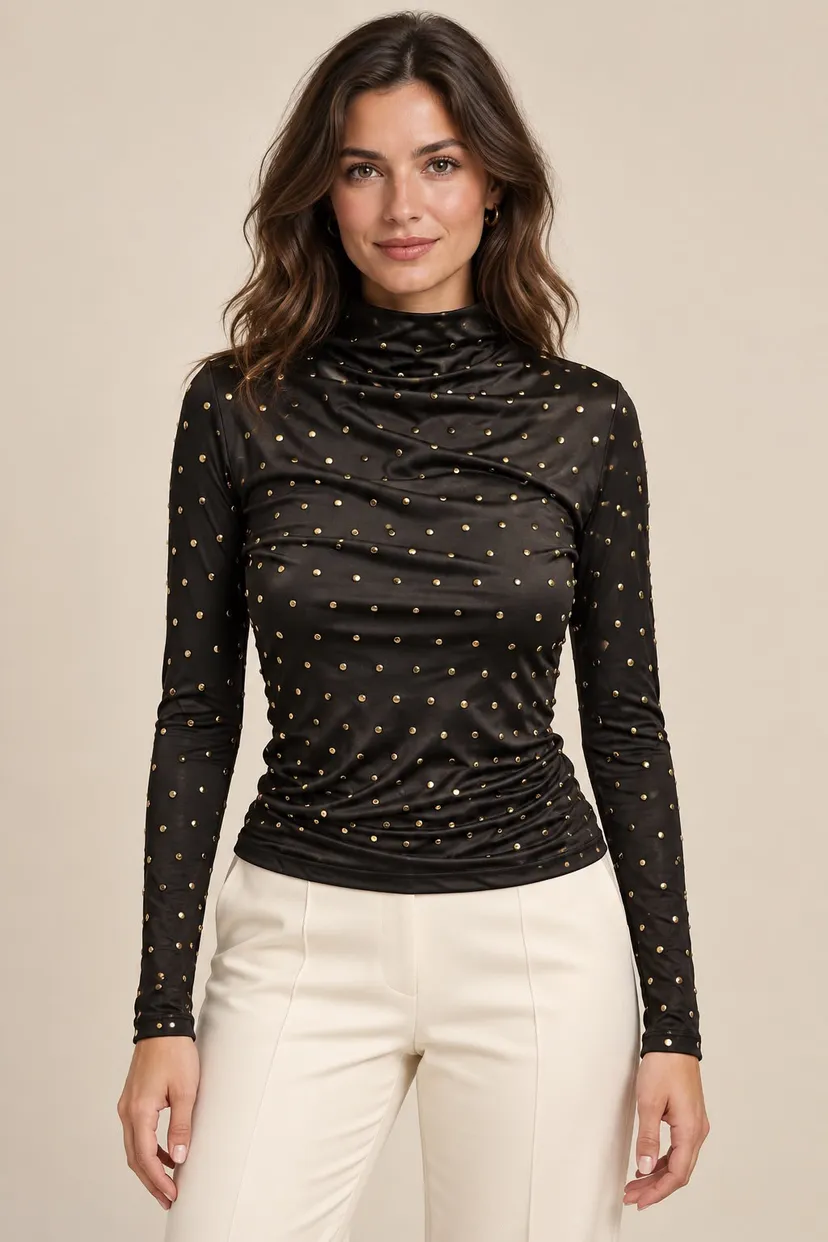
When shopping, look for pieces where the metallic element is a small detail rather than the main fabric. Our Metallic Appliqué Long Sleeve Top uses targeted metallic motifs on a clean base, reducing the overall plastic content while still catching the light.
Better Fabric Choices for Evening Occasions
Opt for matte fabrics with natural drape such as crêpe or soft knits that achieve glamour through cut and silhouette rather than shine. Velvet, although synthetic in many cases, can be chosen in higher-quality versions that last longer. Solid satin or lustrous weaves often deliver occasion appeal with fewer microplastic risks than fully metallic cloths.
Consider separates that mix and match. A versatile top can be worn with different bottoms, increasing the number of outfits from one purchase and lowering the average impact per wear. The Embellished Open Back Top pairs with tailored trousers or a simple skirt, giving multiple looks from limited embellishment.
Natural Fibres Where Practical
While pure natural fibres rarely give the same liquid metallic effect, blends with responsible viscose or organic cotton bases can reduce reliance on virgin polyester. Look for styles that use embellishment sparingly so the main body remains a lower-impact fibre.
Choosing Mindful Party Pieces at Denisa
Focus on versatility and longevity. A dress that works for multiple occasions or can be styled differently across seasons spreads its environmental cost. Our Evening Dresses collection includes shapes that move easily from winter parties to summer events with just a change of layers.
Co-ords extend wardrobe options further. The Studded Zip Jacket & Trousers Co-ord Set lets you wear the jacket with a knit or dress and the trousers with other tops, giving more than a single-occasion outfit.
Read our guide to Metallic and Embellished Pieces for styling ideas that maximise wear.
Caring for Embellished Garments to Reduce Impact
Proper care is one of the most effective ways to lower environmental footprint. Spot clean when possible instead of full washes. Use cold water and mild detergent, and always turn embellished items inside out or place them in a protective bag. Air drying prevents heat damage to metallic finishes.
Repair loose diamanté or sequins immediately; a simple hand stitch can prevent further loss and keep the piece wearable for years. Store away from direct sunlight to stop metallic coatings from tarnishing. Our Fabric Care Finder offers specific guidance for different materials including metallics and embellishments.
Building a Lower-Impact Party Wardrobe
Shift the emphasis from buying new for every event to curating a small selection of high-wear pieces. A metallic top that works with jeans by day and tailored trousers by night, or a versatile blazer that dresses up a simple dress, delivers better value than a heavily embellished dress worn once.
Consider colour and cut that flatter you consistently. The Dresses range includes styles with clean lines and thoughtful details that remain current across seasons. Pairing a striking piece with neutrals from your existing wardrobe also reduces the need for matching accessories.
Investing time in choosing items you genuinely love and will reach for repeatedly is one of the most practical steps toward more mindful fashion.
Shop the edit
 Metallic Appliqué Long Sleeve Top£49.99
 Diamanté Strap Corset Mini Dress in Powder Blue£149.99
 Embellished Open Back Top£79.99
 Rose Gold Metallic Halter Neck Ruched Mini Dress£249.99
Frequently asked questions
Do all metallic fabrics shed microplastics?
Most metallic and synthetic embellished garments do release microplastics when washed. Natural fibre bases with minimal plastic coating shed far less.
How can I make my existing embellished pieces more sustainable?
Wash them infrequently inside a mesh bag on a gentle cycle, air dry, and repair any loose embellishments promptly so the piece lasts for many seasons.
Style notes from the DENISA team. Fit, fabric and care vary by piece, so always check the product page and the care label. Back to the DENISA blog.