
How Weighted Hems Help Satin and Crepe Dresses on Pear Shapes
By the DENISA teamPublished 5 min read
Quick answer
- Weighted hems use small metal or chain inserts to anchor fluid fabrics like satin and crepe.
- They stop skirts from riding up or sticking to hips and thighs on pear shapes.
- Look for dresses with subtle gathers or draping at the hip for balance.
- Pair with structured tops or blazers to create proportion.
Weighted hems can solve the common problem of flowy satin or crepe dresses clinging to hips and thighs on pear-shaped figures. By adding discreet weight at the hemline, the fabric falls cleanly instead of sticking or riding up, creating a smoother line through the lower body.
Pear shapes often carry weight through the hips and thighs, so choosing dresses with movement in the skirt needs careful consideration. A weighted hem helps the fabric skim rather than grip, giving the silhouette balance without altering the dress itself.
Why Pear Shapes Benefit from Weighted Hems
On pear-shaped bodies the shoulders and waist are typically narrower than the hips. Fluid fabrics such as satin and crepe have a tendency to follow the curves beneath them, which can emphasise width through the thighs. A weighted hem counters this by pulling the fabric downward in a straight line, reducing static cling and unwanted movement against the body.
The added weight also improves how the dress behaves when you walk or sit. Instead of the skirt bunching or wrapping around the legs, it maintains its intended shape. This is especially useful for midi and maxi lengths where there is more fabric to manage.
How Hem Weights Work in Satin and Crepe
Hem weights are small metal discs, beads or fine chains sewn into the inside of the hem. In satin dresses they counteract the fabric’s natural slipperiness that can cause it to ride up. In crepe, which has more texture, they prevent the skirt from collapsing against the thighs when static builds up.
Modern weights are discreet and distributed evenly so the drape remains soft rather than rigid. Many of our Evening Dresses use gathered or draped skirts where a weighted hem sits naturally within the design, adding movement without looking heavy.
Fabric Considerations
Satin’s smooth surface reflects light and shows every line underneath, so a weighted hem keeps the skirt away from the body. Matte crepe has a dry hand-feel that can generate static; the weight helps break that contact. Avoid very lightweight fabrics that need oversized weights, as they can pull the dress out of shape.
Choosing the Right Dress for Your Shape
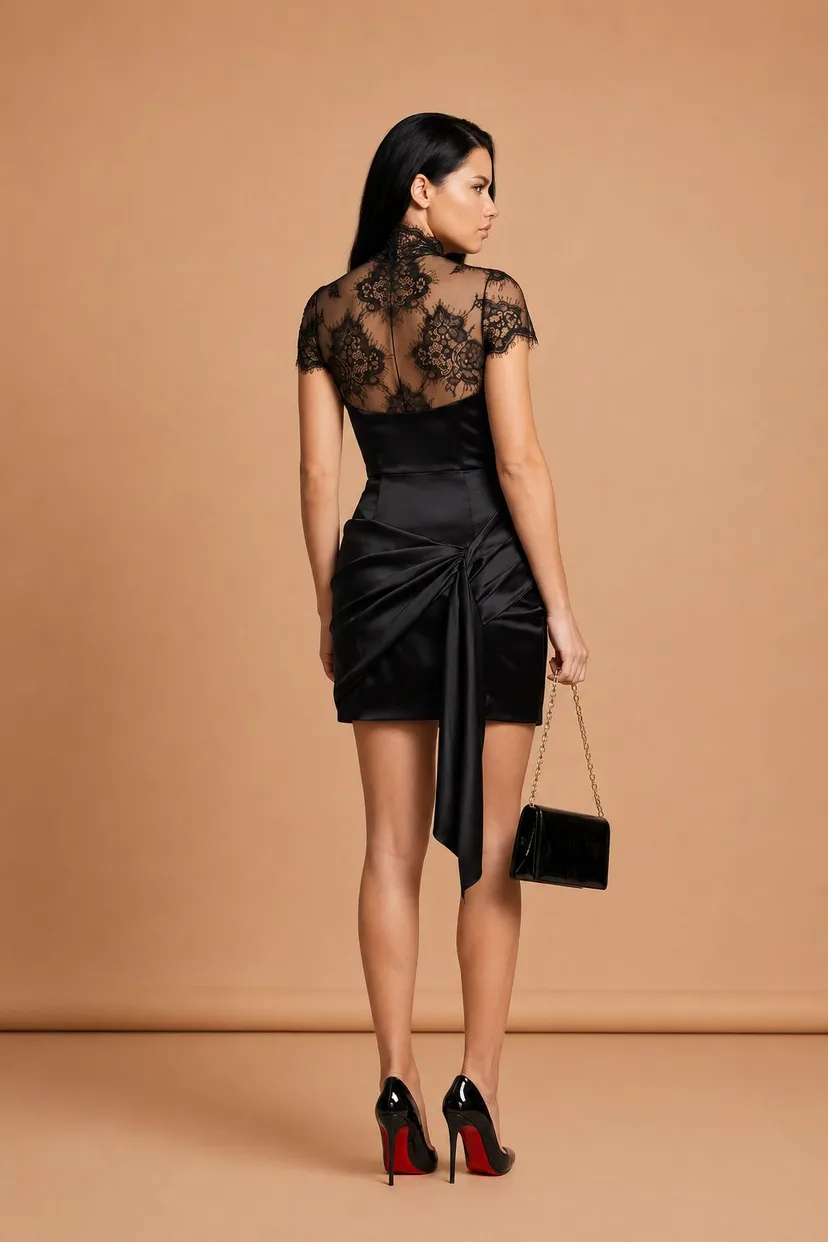
Look for styles that already offer structure above the waist to balance the volume below. A defined bodice or nipped waist draws the eye upward. Dresses with soft gathers at one hip, like our Lace Yoke Satin Wrap Dress, use the drape to skim the thighs before the weighted hem takes over.
Avoid straight sheath styles in fluid fabrics; they tend to cling most. Instead opt for A-line or bias-cut skirts that gain from the downward pull of a hem weight. The Lace Corset Draped Satin Midi Dress shows how a corset bodice paired with draped satin creates contrast between fitted and fluid sections.
Styling Tips to Create Proportion
Pair a weighted-hem dress with structured shoulders or volume on top. Our Asymmetric Lace Hem Blazer adds interest at the shoulder and hem without adding bulk at the hips. Leave it open over a satin dress so the lace edge creates a flattering break in the silhouette.
High-waisted separates also help. The Black High-Waist Draped Trousers prove that draped fabric can work lower down when the waist is clearly defined. On days when you prefer trousers, choose a top that finishes at the hip to mirror the balance you seek in dresses.
For outer layers, a peplum style such as the Tartan Check Peplum Blazer flares out at the exact point where pear shapes widen, visually reducing the difference between waist and hip.
Practical Care and Minor Adjustments
Check the care instructions for your specific fabric. Satin and crepe both respond well to gentle hand washing or dry cleaning to keep their weight and drape intact. Our Fabric Care Finder offers guidance on washing satin without damaging any hidden weights or beads.
If your dress lacks built-in weights, small drapery weights or a fine chain can be added by a tailor. Place them at intervals of 10–15 cm around the hem, testing as you go so the skirt does not become too heavy. This small change often transforms how a dress feels and moves.
Occasion Dressing with Confidence
Evening events call for satin that catches the light, yet many women avoid it because of clinging. A weighted midi or maxi dress lets you enjoy the fabric’s glamour without constant adjustment. Choose styles with subtle ruching at the hip to further distract from any potential cling.
Daytime occasions suit crepe or lighter satin blends. Wear a fluid dress with a simple knit cardigan or denim jacket on top; the contrast in texture stops the eye at the waist and lets the weighted hem do its job below.
Common Mistakes to Avoid
Do not assume all flowy dresses will cling; some bias cuts naturally skim. Test the dress in a fitting room by walking and sitting before buying. Avoid overloading the hem with excessive weight, which can stretch delicate fabrics over time.
Pairing a heavy bottom with oversized tops only exaggerates the pear shape. Keep the upper half fitted or structured. Finally, ignore trends that push very voluminous skirts if your goal is a clean line; moderate volume with a weighted hem works better for everyday confidence.
Understanding your body and the behaviour of different fabrics removes much of the guesswork. With the right hem weight and a few considered styling choices, satin and crepe dresses become reliable favourites rather than occasional worries.
Shop the edit
 Lace Yoke Satin Wrap Dress£249.99
 Black High-Waist Draped Trousers£129.99
 Asymmetric Lace Hem Blazer£99.99
Frequently asked questions
Do weighted hems work on all fabrics?
They are most effective on fluid satin, crepe and lightweight wovens. Stiffer fabrics or heavy knits rarely need them.
Can I add weights to an existing dress?
Yes, small hem weights or chain can be hand-stitched inside the hem. Test the weight first so the drape remains natural.
Style notes from the DENISA team. Fit, fabric and care vary by piece, so always check the product page and the care label. Back to the DENISA blog.