
How to style knitwear for athletic or muscular shoulders
By the DENISA teamPublished 5 min read
Quick answer
- Choose V-necks, scoop necks and off-the-shoulder styles to draw the eye inward.
- Layer with structured yet lightweight jackets or cardigans that sit just off the shoulder line.
- Opt for cropped or fitted knits paired with wider bottoms to balance proportions.
- Use vertical details and soft draping to create length and softness around the upper body.
If you have athletic or muscular shoulders, finding knitwear that flatters without adding volume can feel tricky. The solution lies in strategic layering, neckline choices and silhouette balance that softens the shoulder line while creating definition through proportion rather than bulk.
Knitwear is forgiving and versatile, especially when you understand how cut and layering interact with your frame. By focusing on vertical lines, strategic coverage and balanced proportions you can highlight your strength while achieving a softer, more feminine upper body silhouette.
Choosing the Right Neckline for Shoulder Balance
V-neck and scoop necklines are particularly effective because they draw the eye downwards and inwards, breaking up the horizontal line of broad shoulders. A deep V creates an elongating effect that softens the shoulder area without hiding it. Avoid high crew necks that can emphasise width across the upper body.
Off-the-shoulder or wide boat necks can also work well by exposing the collarbone and creating a diagonal line that softens muscular definition. The key is ensuring the neckline sits comfortably without digging in or slipping off.
Sleeveless Knits and Tops
Sleeveless styles can be surprisingly flattering for athletic shoulders as they expose the arm and create a longer visual line from neck to waist. The Pink Collared Sleeveless Knit Dress demonstrates this with its neat collar that adds polish while the sleeveless cut prevents fabric from sitting directly on the shoulder cap.
Similarly, a style like the Floral Trim Sleeveless Top uses delicate detailing to soften the look. Pair these with a light layer over the top for versatility.
Layering Strategies That Create Softness
Layering is one of the most effective ways to redefine shoulder shape in knitwear. The goal is to add softness and movement around the shoulder without creating extra bulk. A lightweight cardigan or jacket worn open creates vertical lines that slim and soften the area.
Try draping a fine knit cardigan over one shoulder for an asymmetrical look that breaks up the shoulder line. This technique adds interest while preventing the fabric from sitting squarely across the broadest part of your frame.
Structured outer layers can also help. A blazer with a soft shoulder or slight drop can create a clean line that redefines rather than exaggerates your natural shape. The Asymmetric Lace Hem Blazer is particularly useful here because the lace hem introduces softness and movement that contrasts nicely with knit textures.
Sleeve Cuts That Flatter Athletic Shoulders
Sleeve choice makes a significant difference. Raglan sleeves or styles with a slight drop shoulder can soften the transition from shoulder to arm. Avoid tight set-in sleeves that may highlight muscular definition.
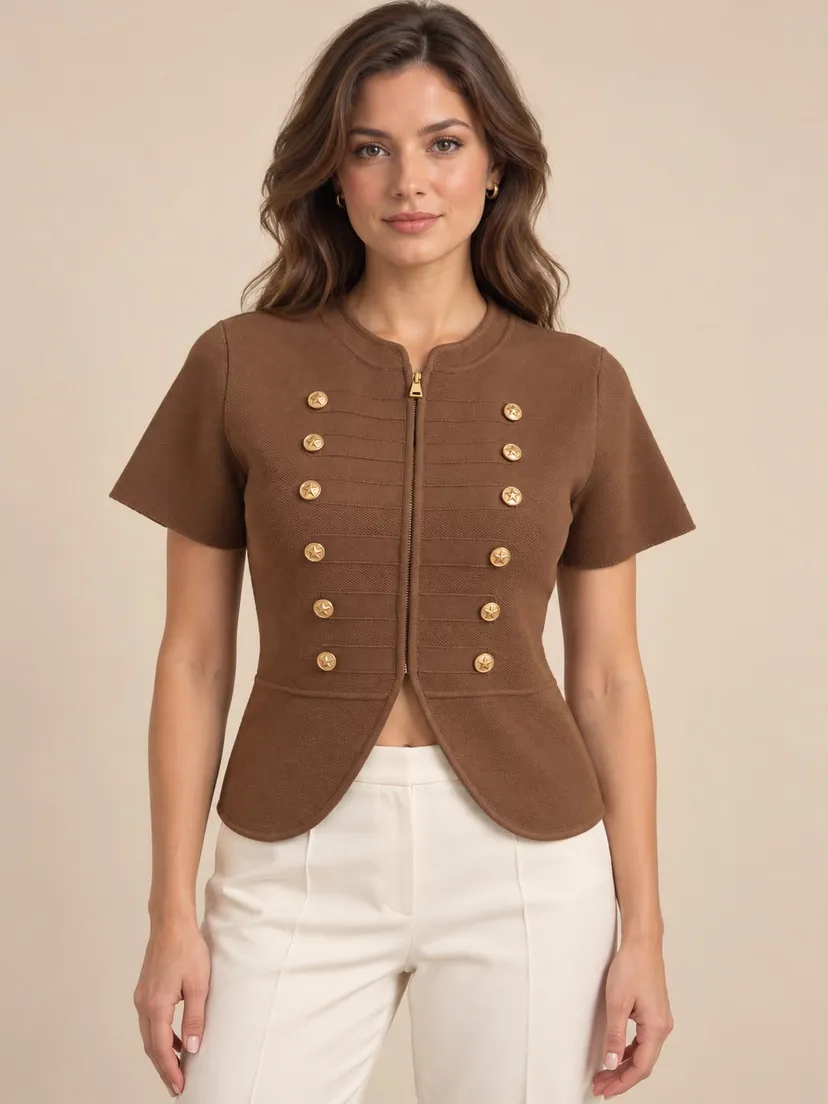
Short sleeves that finish just above the bicep work well when they have some width or softness at the hem. The Military Gold Button Short Sleeve Knit Top uses military-inspired detailing to create structure through buttons rather than added volume at the shoulder.
Three-quarter length sleeves can also be useful as they draw attention to the narrower part of the arm while creating a balanced proportion with wider bottoms.
Using Proportion to Balance Your Silhouette
Creating definition for athletic shoulders often means balancing the upper body with volume or interest lower down. Wide-leg trousers or A-line skirts prevent the outfit from looking top-heavy and create a pleasing overall shape.
The Military Pleated Wide Leg Trousers are excellent for this. Their fluid leg line and pleat details add movement and volume at the lower half, balancing broader shoulders beautifully.
Cropped knit lengths that finish at the high hip can also help by creating a horizontal break that draws the eye away from the shoulders. The Cropped Cable Knit Roll Neck Jumper sits neatly with high-waisted bottoms, creating clean proportions.
Strategic Outer Layers for Knit Styling
Outer layers should skim rather than cling. A zip-front cardigan worn partially open creates vertical lines that lengthen the torso. The Military Rib Knit Zip Cardigan offers structured detailing that adds interest without bulk.
When temperatures drop, consider lightweight jackets with interesting hemlines or textures. These create a frame around your knit base layer and help redefine the shoulder area through contrast.
Always ensure outer layers are sized to sit comfortably over your knit without pulling across the shoulders. A slightly relaxed fit here often looks more polished than something too tight.
Fabric Weight and Texture Considerations
Lighter weight knits with drape tend to skim muscular shoulders more elegantly than heavy, chunky styles. Look for ribbed or finely knitted fabrics that follow the body without adding volume. Avoid overly thick cables or heavy aran knits that can emphasise width.
Textured knits can work if the texture is all-over rather than concentrated at the shoulder. Fine gauge merino or cashmere blends offer softness both literally and visually.
Consider how different fabrics layer together. A smooth knit under a slightly textured jacket creates subtle contrast that adds depth without bulk. For care advice on keeping these pieces in good condition, see our guide on how to wash knitwear.
Building Complete Outfits
Start with a simple knit base in a neckline that flatters your shoulders, add a balancing bottom half with volume or movement, then finish with a light layer that creates vertical lines. This formula works across seasons and occasions.
For example, pair a sleeveless knit top with wide-leg trousers and a soft blazer for the office. Or wear a cropped roll neck with a fluid skirt and an open cardigan for weekend dressing. The combinations are many once you understand the principles of balance and softness.
Experiment in front of a mirror with what you already own. Notice how different necklines and layers change the overall silhouette. Small adjustments in layering and proportion can make a significant difference to how athletic shoulders appear in knitwear.
Visit our Knitwear collection or browse the full range of Tops to find pieces that work with these styling techniques. The goal is clothes that feel comfortable, look polished and work with your natural shape rather than against it.
Shop the edit
 Military Gold Button Short Sleeve Knit Top£69.99
 Cropped Cable Knit Roll Neck Jumper£59.99
 Military Rib Knit Zip Cardigan£69.99
 Asymmetric Lace Hem Blazer£99.99
Frequently asked questions
Can shoulder pads in blazers make athletic shoulders look bigger?
Modern blazers with light or no shoulder padding create clean lines without exaggeration. Choose styles that skim rather than sit rigidly on the shoulder.
Do lighter coloured knits help soften muscular shoulders?
Lighter shades can add softness, but the biggest difference comes from neckline shape and layering rather than colour alone. Pair pale knits with darker outer layers for balance.
Style notes from the DENISA team. Fit, fabric and care vary by piece, so always check the product page and the care label. Back to the DENISA blog.