
How Vertical and Horizontal Detailing Works Across the DENISA Collection
By the DENISA teamPublished 5 min read
Quick answer
- Vertical lines such as seams, pleats and stripes add height and draw the eye upwards for a longer silhouette.
- Horizontal details like wide bands or rows of buttons create width and emphasise curves.
- Combine both directions in one garment for balanced proportions that flatter your shape.
- Military-inspired pleats and gold buttons in our collection offer practical ways to control visual balance.
Vertical detailing such as seams, pleats, stripes and button rows tends to add height and create a longer, leaner silhouette. Horizontal detailing does the opposite, adding width and emphasising curves. Choosing the right direction across the DENISA collection lets you balance proportions and feel comfortable in your clothes.
Strategic placement of these details can flatter different body shapes. This guide explains how vertical and horizontal elements work in practice, with specific examples from our dresses, tops, trousers and jackets.
How Vertical Detailing Creates Length
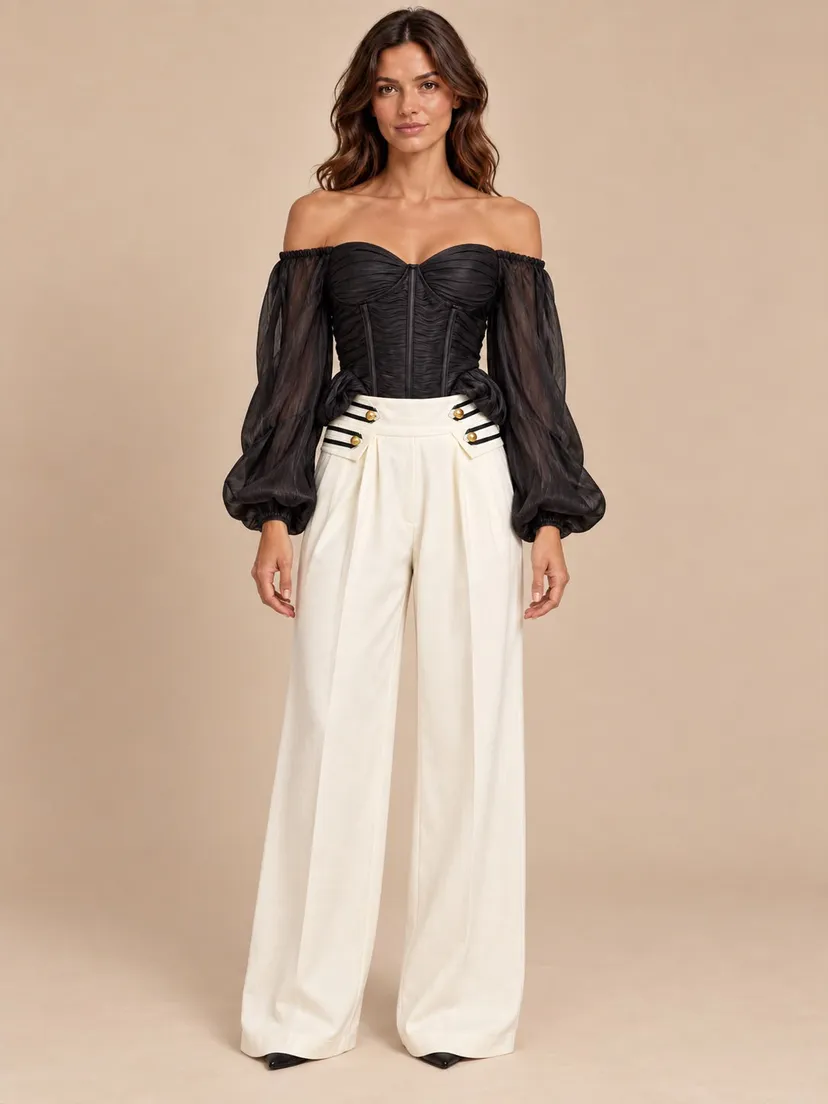
Vertical lines lead the eye up and down the body. This optical effect makes the figure appear taller and narrower. In our collection, front pleats, centre seams, long button plackets and pinstripes all serve this purpose.
The Military Pleated Wide Leg Trousers use sharp front pleats that run the full length of the leg. These vertical pleats break up the width of the wide-leg silhouette and add the illusion of extra height. Pair them with a tucked-in top to keep the vertical line uninterrupted from waist to hem.
Similarly, a row of buttons running down the centre front of a dress or top draws attention vertically. The Sleeveless Button-Front Pleated Dress combines a neat button placket with soft pleats released below the hip. The vertical buttons keep the eye moving upward while the pleats add gentle movement without adding width at the waist.
When Horizontal Detailing Adds Balance
Horizontal lines stop the eye and can make an area appear wider. Used thoughtfully they balance narrow shoulders, soften a straight torso or create the appearance of curves. Wide waistbands, horizontal seams across the bust or shoulder yokes are common examples.
In knitwear, a horizontal band of military-style gold buttons can add structure. The Military Gold Button Short Sleeve Knit Top features gleaming buttons arranged across the chest and shoulders. This horizontal emphasis broadens the upper body slightly, which can balance wider hips or create a more hourglass shape when worn with flared or wide-leg bottoms.
Horizontal detailing also appears in corsetry-inspired seams. Curved horizontal seams under the bust on a fitted top can define the waist and add subtle width where needed for proportion.
Mixing Vertical and Horizontal for Harmony
Most flattering garments combine both directions. A vertical centre seam paired with horizontal shaping seams at the bust creates definition without overwhelming any single area.
Look at the Ivory Rosette Button Draped Corset Blouse. The double rows of gold rosette buttons run vertically down the front, adding length through the torso. At the same time, the draped ruched panel and corset-style curved hem introduce soft horizontal shaping that flatters the waist. This mix works well for many body shapes because it lengthens while gently defining.
Our Jackets & Blazers often use both elements. A military-inspired jacket might have vertical braid or button placement on the front paired with horizontal pocket flaps or epaulettes. The contrast creates interest and allows you to adjust visual balance depending on what you wear underneath.
Choosing Details by Body Shape
If you have a pear-shaped figure, vertical detailing on bottoms helps to elongate the lower half. The pleated wide-leg trousers mentioned earlier balance fuller hips by drawing the eye down long vertical lines. On top, a horizontal detail at the shoulders, such as the embellished yoke on certain knit tops, can add width to balance the silhouette.
For an apple shape, vertical seams through the centre of a dress or top create a slimming effect through the midsection. Avoid too many horizontal bands across the tummy; instead look for styles where horizontal detailing sits higher, such as underbust seaming on our corset styles.
Straight or athletic shapes benefit from horizontal details across the bust or shoulders to add softness and curves. A sleeveless top with floral trim along the hem introduces a gentle horizontal line that breaks up a columnar silhouette without adding bulk.
Hourglass figures can wear both directions confidently. The key is keeping proportions even. A fit-and-flare dress with vertical seams through the bodice and horizontal emphasis at the waist highlights natural curves while maintaining balance.
Practical Styling Tips from the Collection
When shopping our Dresses category, check the direction of the strongest lines. An asymmetric neckline on an evening dress can act as a diagonal that softens both vertical and horizontal effects. The Evening Dresses often use ruching and seams in multiple directions to flatter a range of shapes for special occasions.
In Tops and Blouses, consider sleeve and cuff details. Long sleeves with vertical split cuffs, like those on certain satin dresses, continue the lengthening effect right to the wrist. Horizontal button arrangements on cuffs can add a finishing detail without disrupting overall balance.
Our military-inspired pieces offer clear examples of controlled detailing. For more on this aesthetic, read our guide to The Military Fashion Trend: Gold Buttons, Pleats and Braid. The structured placement of buttons and pleats in these designs makes them particularly useful for experimenting with vertical and horizontal emphasis.
Layering and Proportion
Layering changes how detailing reads. A vertically detailed cardigan worn open over a horizontally emphasised top can neutralise strong lines. The Knitwear range includes ribbed cardigans with military zip details that add subtle vertical texture when left open.
When wearing co-ords, note how the jacket and trouser lines interact. A studded zip jacket with horizontal hardware worn with vertically pleated trousers creates pleasing contrast. Breaking up the co-ord and wearing pieces separately gives even more flexibility to adjust balance day to day.
Ultimately, the most useful approach is to stand in front of a mirror and observe how each seam, pleat or button row affects your shape. DENISA pieces are designed with these principles in mind, so you can make informed choices that feel practical, honest and flattering for real life.
Shop the edit
 Military Pleated Wide Leg Trousers£99.99
 Military Gold Button Short Sleeve Knit Top£69.99
 Ivory Rosette Button Draped Corset Blouse£129.99
 Sleeveless Button-Front Pleated Dress£109.99
Frequently asked questions
Can vertical detailing make me look taller?
Yes. Strong vertical seams, front pleats or unbroken stripes guide the eye up and down, creating the impression of added height without changing your actual measurements.
Are horizontal details always unflattering?
Not at all. Placed strategically across the shoulders or waist they can add softness and balance narrower areas. The key is choosing the right scale and position for your shape.
Style notes from the DENISA team. Fit, fabric and care vary by piece, so always check the product page and the care label. Back to the DENISA blog.