
How Pocket Style and Position in Tailored Trousers Affects Curvy Hips
By the DENISA teamPublished 6 min read
Quick answer
- Side slash pockets on high-waisted styles reduce bulk around the hips for pear shapes.
- Welt or back pockets draw the eye away from the widest part of the hips.
- Avoid patch pockets that sit directly on the hip area as they add visual width.
- High-waist and pleated designs balance proportions when paired with the right top.
If you have curvy hips, the placement and style of pockets on tailored trousers can make a noticeable difference to how your lower half looks. Side slash pockets that sit higher tend to skim the hips without adding bulk, while patch pockets placed directly on the widest point can emphasise width. For pear and hourglass shapes, choosing styles with discreet pockets and a higher waist helps create smoother lines through the hip area.
Understanding how different pocket types interact with your shape allows you to select trousers that feel comfortable and look balanced. This guide explains the practical effects of pocket position, rise and leg shape so you can make confident choices when shopping for tailored trousers.
Pocket Types and Their Effect on Curvy Hips
Pockets come in several forms, each affecting the visual emphasis on hips differently. Side slash pockets are cut into the side seam at an angle. When positioned higher on a waistband they create a clean line that avoids adding volume to the hip area. This makes them a practical choice for pear shapes who want to minimise emphasis on the lower body.
Welt pockets, often found at the back, sit flat against the fabric. They draw attention upwards and backwards rather than outwards, which can help balance an hourglass figure. In contrast, patch pockets are sewn onto the surface of the trouser. If they sit directly over the hips they can add visual width, so they are best avoided or chosen in styles where they are placed higher or on the back only.
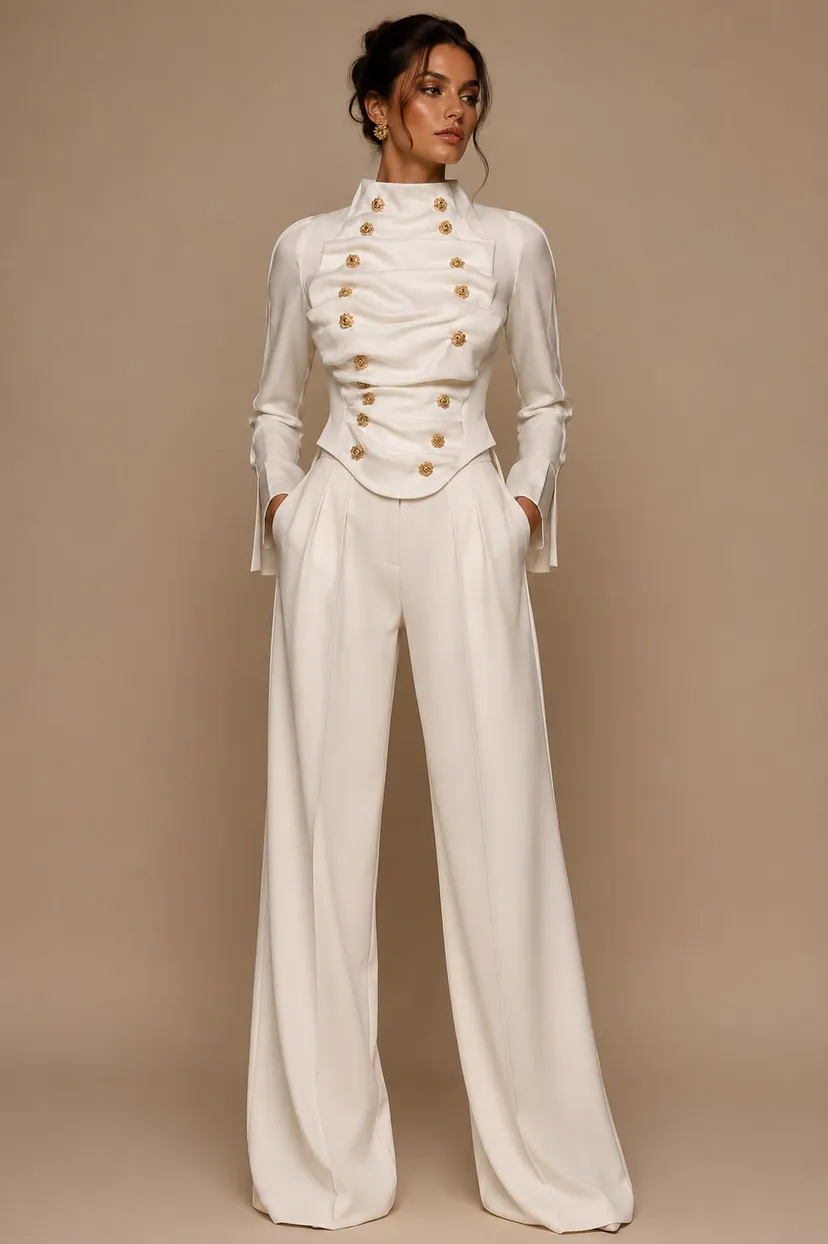
Our trousers often feature side slash or welt pockets that are tailored to sit cleanly against the body. The Ivory High Waist Pleated Wide Leg Trousers include side pockets that are integrated neatly into the pleated front, helping to keep the hip area smooth.
How Waist Height Changes Pocket Position
A higher waistband lifts the starting point of side pockets, placing them above the widest part of the hips. This creates an elongating effect that balances pear shapes by drawing the eye vertically. For hourglass figures, an extra-high waist can define the smallest part of the waist before skimming over the hips.
Lower-rise trousers position pockets further down, which can sometimes cause the pocket opening to gape or sit right on the curve of the hip. This adds visual bulk for many curvy shapes. Choosing high-waisted styles ensures pockets sit in a more flattering spot without needing constant adjustment.
The Black High-Waist Draped Trousers use a sharply tailored high waistband that positions side slash pockets higher, keeping the silhouette clean through the hip and thigh.
Leg Shape and Pocket Balance
Wide-leg trousers create a straight vertical line from the waist down, which counteracts the width of curvy hips. When combined with side pockets rather than front patch styles, the overall effect is streamlined. Pleats at the front of wide-leg cuts can also add subtle volume at the waist, balancing the proportion of wider hips.
Tulip or draped leg shapes that narrow towards the hem can emphasise hips if the pockets flare outwards. A clean side slash pocket helps these styles remain elegant. Straight or slightly tapered trousers work well when the pocket does not interrupt the line at the hip.
For a co-ordinated look that balances proportions, the Black Suede-Effect Two-Piece Trouser Set pairs its trousers with a matching top, allowing the clean lines of the trousers to create harmony without drawing extra attention to the hips.
Styling Tops to Work With Trouser Pockets
The right top can further soften the effect of pockets on curvy hips. A top that finishes at the high waist or tucks in neatly emphasises the smallest part of the waist, balancing the lower half. Longer tops that skim over the hips can disguise pocket bulk if needed.
Structured shoulders or details at the neckline draw the eye upwards, counteracting any emphasis created by lower pockets. Knitwear with subtle texture or military-style detailing adds interest higher on the body. The Military Gold Button Short Sleeve Knit Top provides structured detailing at the shoulders and waist, helping to balance the silhouette when worn with high-waisted trousers.
Layering with a blazer or jacket can also create structure above the hips. A peplum style that nips in at the waist and flares gently can mirror the curve of the hips without exaggerating them.
Common Pocket Mistakes to Avoid
One frequent issue is choosing trousers where the pockets gape open when you stand or sit. This creates horizontal lines that widen the hip visually. Testing the fit in a mirror from multiple angles helps identify this before buying.
Another mistake is pairing very fitted trousers with large front patch pockets. The combination can highlight curves in a way that feels unbalanced for pear or hourglass shapes. Opting for fluid fabrics with discreet pockets often gives a more polished result.
Back welt pockets are usually safer than large hip-level ones, but ensure the trouser seat is not too tight, as this can distort the pocket area. Our guide on how trousers should fit offers more detail on achieving the right balance through the seat and waist.
Co-ord Sets for Balanced Proportion
Trouser co-ord sets take the guesswork out of balancing curvy hips. When the jacket or top is designed to finish at the natural waist or features shaping details, it works with the trouser pockets to create an intentional silhouette. The matching pieces ensure the eye travels smoothly from top to bottom.
The Studded Zip Jacket & Trousers Co-ord Set offers clean lines in the trousers paired with a structured jacket that adds definition at the shoulders and waist. This combination helps offset emphasis on the hips created by any pocket placement.
Many of our Sets & Co-ords are cut to flatter a range of shapes, with thoughtful pocket and waist details that support balanced styling.
Choosing Trousers That Suit You
Ultimately, the most flattering trouser pockets for curvy hips are those that sit higher, lie flat and do not add bulk at the widest point. High-waisted styles with side slash or welt pockets tend to deliver the most reliable results for pear and hourglass shapes. Pairing these with tops that define the waist or add interest higher up creates a polished, comfortable outfit.
Take time to try different rises and leg shapes, checking how the pockets sit when you move. The right pair will feel secure and look smooth, letting you focus on wearing what makes you feel confident. Explore more in our Curvy Styling Guide for additional practical advice on fit and proportion.
Shop the edit
 Ivory High Waist Pleated Wide Leg Trousers£129.99
 Black High-Waist Draped Trousers£129.99
 Black Suede-Effect Two-Piece Trouser Set£109.99
 Studded Zip Jacket & Trousers Co-ord Set£139.99
Frequently asked questions
Do side pockets make hips look wider?
Side slash pockets that sit higher on the waistband tend to skim rather than widen curvy hips. Deep, angled pockets are more flattering than those that gape or sit low.
Are wide-leg trousers better for hourglass figures?
Wide-leg trousers can balance an hourglass shape by creating a long, straight line from the waist down. Choosing styles with side pockets rather than front patch pockets helps maintain proportion.
Style notes from the DENISA team. Fit, fabric and care vary by piece, so always check the product page and the care label. Back to the DENISA blog.