
How to Minimise Back Bulge in Blouses
By the DENISA teamPublished 6 min read
Quick answer
- Choose fabrics with slight stretch and structure like crêpe or soft tweed to smooth without clinging.
- Look for corset-style seaming, ruched panels and strategic darts that sculpt the back.
- Layer with a smoothing bodysuit or fine knit underneath for an invisible base.
- Opt for higher armholes, princess seams and wrap styles that avoid tight pulls across the back.
If you have searched for "back bulge blouse fit" then you are not alone. Many women find that even well-tailored blouses can highlight bra bands or create soft folds across the back. Thoughtful choices in fabric, cut and layering make a real difference. At DENISA we design blouses and tops with sculpting details that help you feel confident and comfortable.
This guide shares practical techniques that work with real bodies. From choosing the right material to understanding how seams and layering interact with your shape, these tips focus on smooth results rather than restriction.
Fabric Choices That Smooth the Back
The weight, drape and stretch of a fabric determine how it behaves over the bra line and around the shoulder blades. Lightweight, clingy fabrics tend to highlight every contour while heavier or structured ones skim and even out the silhouette.
Matte crêpe is excellent because it has a fluid hand yet enough body to avoid sticking. It moves with you rather than gripping. Bouclé tweed, as used in our Powder Blue Blouse, offers a textured surface that disguises small irregularities while the soft boucle construction adds a gentle firmness.
Stretch fabrics can help when they contain sculpting panels. Look for those with targeted compression rather than all-over cling. Avoid very thin jerseys unless you plan to layer them. For more information on how different materials behave, see our guide to What Is Crêpe Fabric?.
Fabrics with natural give
- Matte crêpe – drapes beautifully and resists creasing into lumps.
- Soft bouclé tweed – the looped texture breaks up the appearance of lines.
- Suede-effect stretch with seam shaping – offers light control without shine.
Cut and Seaming Techniques That Minimise Bulge
The pattern itself is as important as the cloth. Princess seams, side darts and vertical panels guide fabric smoothly over curves instead of stretching horizontally across them. A higher armhole prevents the blouse from riding up and creating rolls at the back.
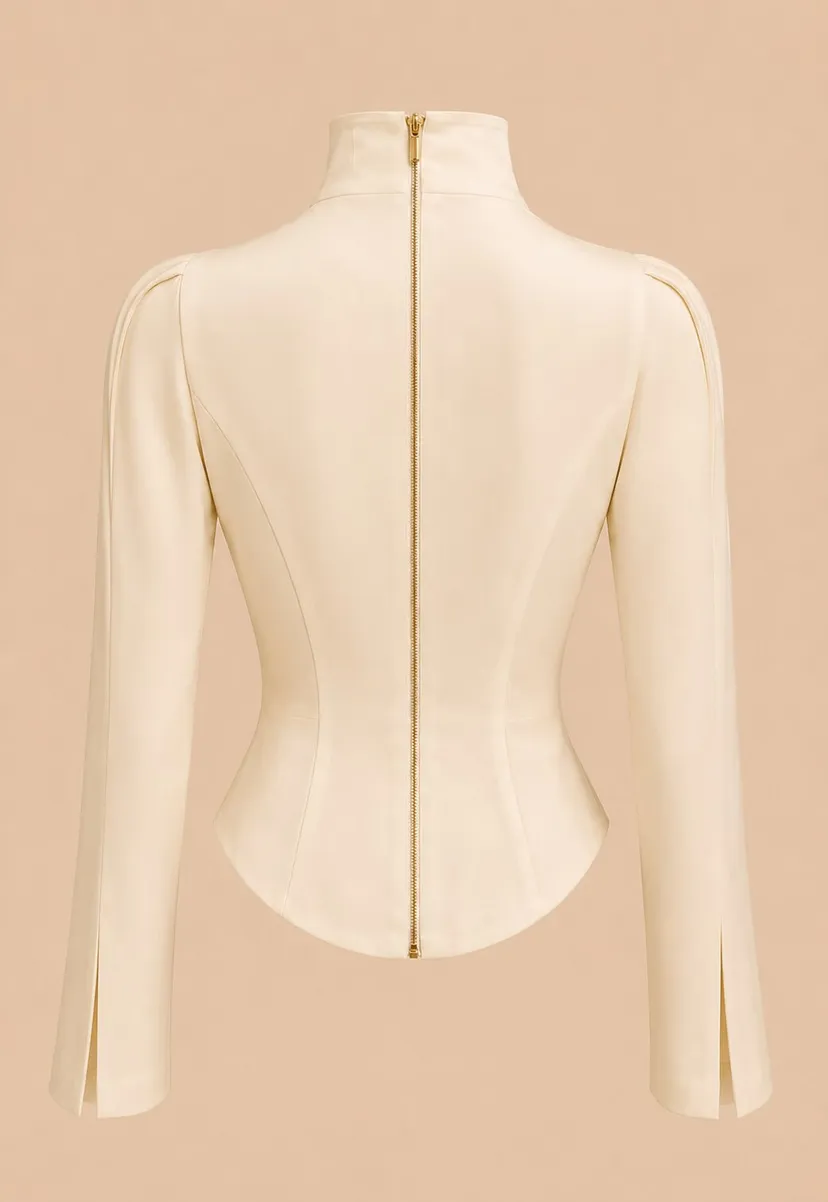
Corset-inspired designs are particularly effective. Our Ivory Rosette Button Draped Corset Blouse uses seamed panels and ruched draping to sculpt rather than pull. The curved hem and fitted sleeves with split cuffs allow movement without tightness across the shoulder blades.
Wrap styles and peplum cuts can also help because they avoid a single tight band across the mid-back. Look for blouses with a slight ease through the upper back and shoulder area. A back yoke or subtle gathering can distribute fabric more evenly.
The Role of the Right Underwear
A well-fitting bra is the foundation, but even the best bra can show under thin or tailored fabric. Smoothing bodysuits remove the band lines entirely. Our Strapless 'D' Hardware Thong Bodysuit in Butter Yellow features contoured seaming and a thong back that keeps lines invisible under high-waisted bottoms and fitted tops.
Choose underwear in a similar tone to your blouse so any faint outline blends. Seamless, laser-cut pieces sit flatter than those with thick elastic. If you prefer traditional bras, opt for wider, smoother bands that sit level rather than digging in.
Layering Strategies for a Smoother Silhouette
Layering is one of the simplest ways to reduce back bulge. A fine knit or smoothing camisole under a blouse creates an even base layer that prevents the outer fabric from catching on bra details.
Try a lightweight long-sleeve top such as our Metallic Appliqué Long Sleeve Top in off-white beneath an open blazer or sheer blouse. The smooth knit fills in gaps and softens transitions. For cooler days, a fitted knit dress layered under a tailored jacket gives structure without bulk.
When wearing a blouse tucked into trousers, choose high-waisted styles with a smooth waistband. Our Ivory High Waist Pleated Wide Leg Trousers sit above the natural waist and create a clean line that reduces mid-back pressure.
Blouse and Top Styles That Flatter the Back
Certain silhouettes are naturally more forgiving. Sleeveless styles with wider straps or cap sleeves draw the eye away from the upper back. Three-quarter or full sleeves with subtle volume at the shoulder balance the figure and stop fabric pulling tightly across the back.
Look for blouses with back darts that curve into the waist rather than sitting straight across. Slight blouson shapes or those with a defined waistband often sit better than boxy cuts. Military-inspired or structured shoulders can also create a stronger frame that makes the back appear smoother.
Our range of blouses and tops includes many of these details, from corsetry to soft draping. Pairing them with jackets and blazers gives you options for both office and occasion wear.
Practical Fitting Tips in the Changing Room
Always check the back view in a three-way mirror or by taking a quick photo. Raise your arms, sit down and turn from side to side. The fabric should skim without pulling or gaping at the armholes.
Pinch a small amount of fabric at the side seam. If the blouse feels tight across the back even after adjustment, try the next size or a different cut. Pay attention to where the shoulder seam sits – it should rest on the shoulder, not slip backwards.
Walk around and check that nothing rides up. A blouse that stays put when you move is more likely to look smooth all day. If you love a particular style but the back needs extra help, a good tailor can add discreet darts or adjust armhole depth.
Caring for Your Blouses to Keep Them Smooth
Proper care preserves the shape and hand of the fabric. Steam rather than iron where possible to avoid flattening sculptural details. Our How to Steam Clothes guide offers fabric-specific advice.
Store blouses on padded hangers to prevent shoulder marks. For tweed or structured pieces, occasional airing keeps them fresh without frequent washing. Following the care instructions will help your garments keep their smoothing properties season after season.
With the right combination of fabric, cut, underwear and layering, fitted blouses can become some of the most flattering items in your wardrobe. Explore our New In collection for the latest styles designed with these principles in mind.
Shop the edit
 Ivory Rosette Button Draped Corset Blouse£129.99
 Powder Blue Blouse£89.99
 Strapless 'D' Hardware Thong Bodysuit in Butter Yellow£79.99
 Ivory High Waist Pleated Wide Leg Trousers£129.99
Frequently asked questions
Can the right blouse fabric really hide back fat?
Yes. Fabrics with a little weight and natural give, such as matte crêpe or bouclé tweed, skim rather than cling and help create a smoother line.
Should I size up in fitted blouses to avoid bulges?
Not necessarily. Proper fit through the shoulders and armholes often matters more than overall size. A blouse that is too large can sag and create new folds.
Style notes from the DENISA team. Fit, fabric and care vary by piece, so always check the product page and the care label. Back to the DENISA blog.