
How to Dress an Inverted Triangle Shape with DENISA Blazers, Tops and Dresses
By the DENISA teamPublished 6 min read
Quick answer
- Choose blazers with set-in or slightly dropped shoulders to avoid emphasis.
- Opt for V-necklines and softer collars to draw the eye inward.
- Select long sleeves with subtle details rather than voluminous styles.
- Layer with structured yet lightweight jackets for proportion.
If you have broader shoulders than hips, an inverted triangle figure can make finding balance in outfits feel tricky. The key is choosing pieces that soften the shoulder line without adding bulk, using clever necklines, sleeve styles and structured yet lightweight layers. DENISA blazers, tops and dresses offer practical options that create proportion through cut and detail rather than volume.
Understanding your shape means working with your natural lines. Broad shoulders paired with a narrower lower half benefit from styles that draw the eye vertically or inward, creating the illusion of balance. The right blazer fit, sleeve length and neckline choice make a real difference to how an outfit sits on the body.
Understanding the Inverted Triangle Shape
An inverted triangle figure typically features wider shoulders, a broader back and a narrower waist and hips. This athletic silhouette is elegant but can feel top-heavy in certain cuts. The aim is to soften the shoulder area while adding subtle interest lower down. Avoid anything that widens the upper body further, such as strong shoulder pads or very wide necklines that stretch horizontally across the frame.
Instead, focus on pieces that follow the shoulder line neatly and use vertical or diagonal details to guide the eye. DENISA blazers with set-in shoulders can skim without exaggerating width, while carefully chosen necklines and sleeves prevent the eye from stopping at the shoulder line.
Choosing Blazers That Create Balance
A well-fitting blazer is one of the most useful tools for inverted triangle figures. Look for styles with natural or slightly dropped shoulders that follow your existing line rather than extending it. Structured but lightweight fabrics help create shape without heaviness. The Jackets & Blazers at DENISA are designed with clean lines that work well for this purpose.
Single-breasted styles with a narrow lapel draw the eye inward. Avoid double-breasted or very padded styles that add bulk across the chest and shoulders. When trying a blazer, check that the shoulder seam sits exactly on your natural shoulder point. A blazer that is too wide here will emphasise rather than balance. Our guide on how a blazer should fit explains shoulder and sleeve placement in more detail.
Pair a tailored blazer with wider-leg trousers or a full skirt to add volume below the waist. This creates the counterbalance your shape needs. A cropped blazer style can also highlight the narrower part of your frame if it finishes at the waist.
Necklines That Soften Broad Shoulders
Necklines play a vital role in redirecting attention. Deep V-necklines are particularly effective as they create a vertical line that narrows the upper body visually. Sweetheart necklines also work well by softening the area around the collarbone and drawing focus to the centre of the chest.
The Sweetheart Neck Long Sleeve Corset Top is a strong example. Its curved neckline softens the shoulder area while the corset-style bodice defines the waist. This combination balances broader shoulders without adding fabric across them. Similarly, the Ivory Rosette Button Draped Corset Blouse uses draping and a high funnel neck that still manages to create softness through its ruched front.
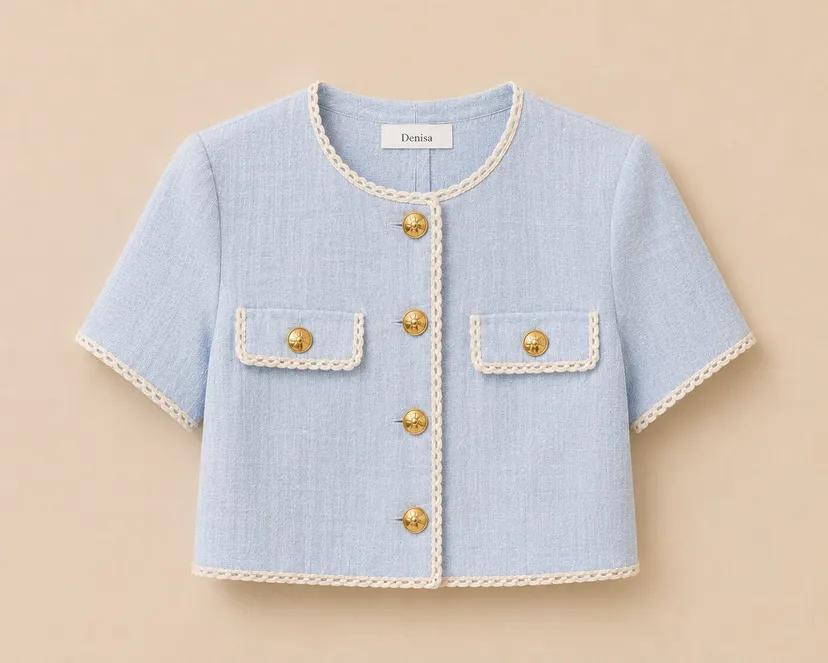
Avoid boat necks, square necks or very wide crew necks that stretch the shoulder line further. A narrow collar or subtle trim, as seen on the Powder Blue Blouse, can frame the face and shoulders neatly without widening them. This blouse’s cropped collarless cut and delicate braid trim add detail without bulk.
Sleeve Styles That Avoid Adding Bulk
Sleeves can either emphasise shoulders or help minimise them. Long, fitted sleeves in lightweight fabrics are often the most flattering choice for inverted triangle figures. They create a continuous line from shoulder to wrist that elongates the arm without adding width at the top.
Look for sleeves that start neatly at the shoulder seam rather than with gathers or puff details. Subtle cuff interest, such as buttoned or split cuffs, adds polish at the narrowest part of the arm. The long sleeves on many DENISA tops are cut to skim without clinging, making them practical for year-round wear.
Short sleeves can work if they are tailored and finish at a flattering point on the upper arm. The military-style detailing on some knit tops adds interest without volume. Steer clear of raglan sleeves or styles with heavy shoulder detailing that extend the horizontal line. Three-quarter sleeves can also be useful as they break up the arm and draw attention downward.
Layering Techniques for Proportion
Layering offers another way to create balance. A lightweight blazer worn open over a softer top creates vertical lines that slim the upper body. Choose base layers with interesting necklines that show above the blazer lapel. This combination adds structure at the shoulder while keeping the overall look light.
Pairing a blazer with a dress that has movement in the skirt is particularly effective. The Dresses collection includes styles with wrap fronts and softer shoulders that complement tailoring. An off-shoulder style can sometimes work if the neckline is soft and the sleeves balance the look, but always check that it does not pull across the back.
Knitwear can be useful when chosen carefully. A fine knit with a V-neck or soft roll neck worn under a blazer adds texture without weight. Avoid chunky knits with wide necks that add bulk across the shoulders. The goal is to keep the upper layer light and structured while adding subtle volume or interest at the hem.
Practical Outfit Formulas
A reliable formula is a V-neck or sweetheart top with long sleeves, tucked into high-waisted wide-leg trousers, finished with a lightly structured blazer. The trousers add width at the hem to balance the shoulders, while the neckline and sleeves keep the top half neat.
For evenings, a dress with a lace yoke or soft draping at the neck can soften the shoulder line beautifully. The structured bodice and defined waist create shape that complements an inverted triangle figure. Pair with simple heels or metallic accessories to finish the look without adding visual weight at the top.
Another approach is a sleeveless top with delicate trim worn under a blazer. The contrast between soft skin and structured tailoring creates definition. This works particularly well for occasions where you want polish without feeling restricted. Always check in a mirror that the shoulder of the blazer aligns with your natural shoulder and does not extend beyond it.
These small adjustments to neckline, sleeve and blazer choice make dressing for an inverted triangle figure far more straightforward. The pieces in the DENISA Tops and Jackets & Blazers ranges are designed with these practical considerations in mind, offering cuts that flatter without fuss.
Shop the edit
 Powder Blue Blouse£89.99
 Sweetheart Neck Long Sleeve Corset Top£89.99
 Ivory Rosette Button Draped Corset Blouse£129.99
Frequently asked questions
What necklines work best for inverted triangle body shapes?
V-necks, sweetheart necklines and softer draped styles draw attention downward and inward, reducing emphasis on the shoulders.
Should inverted triangle figures avoid shoulder pads?
Yes, structured pads add width. Instead look for blazers with natural or lightly set-in shoulders that follow your frame.
Style notes from the DENISA team. Fit, fabric and care vary by piece, so always check the product page and the care label. Back to the DENISA blog.