
How to Trace Your Clothes Using Free Supply Chain Tools
By the DENISA teamPublished 5 min read
Quick answer
- Free tools like Open Supply Chain and blockchain explorers let you trace fibres to factories.
- Look up certifications on Higg and Oeko-Tex databases for verified details.
- Apps such as Good On You and KnowTheChain add brand-level transparency scores.
- Pair traceability data with care advice to make garments last longer.
Curious about the journey your clothes have taken before reaching your wardrobe? Free online tools now make it possible to trace garments from raw fibre through spinning mills, dye houses, factories and final assembly. These clothing supply chain tools give you data on who made what, where and under what standards, helping you shop with clearer eyes.
If you want to check labour conditions, environmental impact or material origins, the right platforms turn opaque supply chains into something you can actually explore. Below are practical ways to use them, from scanning a care label to searching public supplier databases.
Open Databases That Map the Supply Chain
Start with Open Supply Chain, a free collaborative platform that lets brands publish factory names, addresses and audit summaries. Search by brand or product category to see lists of suppliers.
Complement this with the Fashion Transparency Index methodology, which scores brands on what they disclose. The underlying company responses are often public and detail tier-one and tier-two suppliers.
Blockchain Explorers and QR Traceability
Some garments now carry a unique QR code or NFC tag linked to an immutable blockchain record. Scan the code with your phone and you can see the fibre source, mill, dye batch, factory and even the date the item left the sewing line. Free explorers such as those run by TextileGenesis or Circular Fashion let you view these records without buying special apps.
If a garment lacks a code, look for a certification number instead. Entering an Oeko-Tex Standard 100 certificate ID into the public lookup tool instantly shows the testing institute, product category and validity period. This confirms the absence of harmful chemicals but does not extend to labour data, so combine it with other checks.
Certification Databases Worth Knowing
The Higg Index offers a public-facing materials library that rates fibres on water use, carbon and waste. Search by material type to compare conventional cotton against recycled or organic versions. GOTS and Fairtrade also maintain free public registries of certified facilities; enter a supplier name to see which standards it holds.
Brand-Level Tools and Ratings
Good On You and KnowTheChain provide free mobile-friendly ratings that pull together public data on wages, working hours and environmental policies. They do not replace factory-level checks but give a useful overview before you browse a site. Look for brands that publish full supplier maps rather than those that only state general commitments.
For UK shoppers, the British Fashion Council’s transparency resources highlight companies that have signed the Fashion Pact or publish annual impact reports. These documents often contain the same supplier lists used by the tools above.
Linking Traceability to Pieces You Already Own
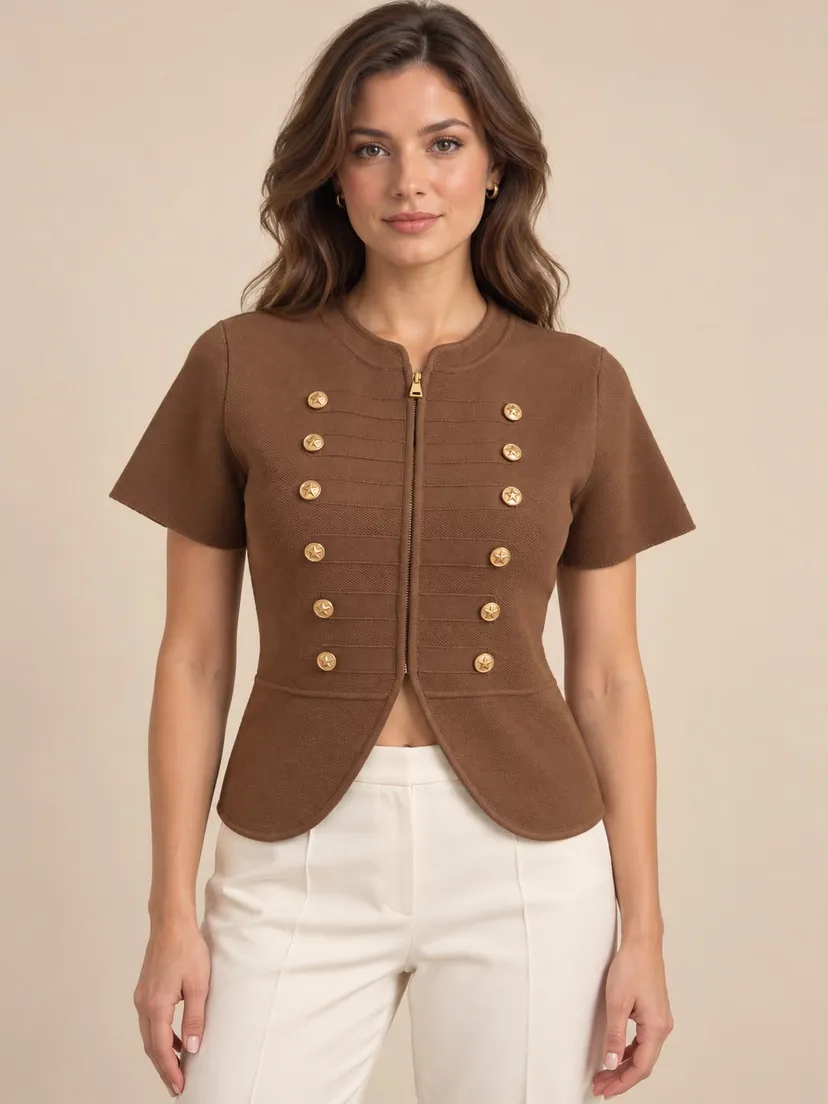
Take the Military Gold Button Short Sleeve Knit Top. Checking the brand’s supplier list can reveal whether those mills hold environmental certifications. The same approach works with Military Pleated Wide Leg Trousers, whose fabric journey you can follow from yarn to the pleating stage.
Our Sets & Co-ords often use coordinated fabrics from the same mill. Seeing that shared origin in a supplier map helps you understand consistency in quality and standards across a capsule wardrobe. Similarly, the Jackets & Blazers category includes styles like the Asymmetric Lace Hem Blazer, where lace trim and base fabric may come from different specialist suppliers; traceability tools let you verify both.
Turning Data Into Practical Decisions
Once you have the information, use it alongside care guidance. Our guide to Clothing Care Symbols Explained shows how to maintain garments so they need replacing less often.
Focus on a few trusted suppliers rather than chasing every new brand. Many of the free tools allow you to save favourite factories or materials, building a personal reference list over time. This turns one-off checks into a habit that informs every purchase.
Common Limitations and How to Work Around Them
Not every factory appears in public databases yet. Smaller specialist makers, especially those producing lace, satin or tweed, may be listed only by code rather than name for commercial reasons. In these cases, look at the brand’s overall tier-one supplier disclosure and see whether it matches the fibre data from material libraries.
Some tools focus heavily on cotton, polyester and denim while offering less detail on wool, silk or metallics. Cross-reference with the brand’s own material declarations and, where possible, request further information directly. Honest brands welcome specific questions about their supply chain.
Building a More Transparent Wardrobe Over Time
Begin with the pieces you wear most. Trace one item from your current wardrobe, note the suppliers, then look for similar standards when buying new. Over a season you will naturally gravitate toward brands that publish clear data.
Pairing traceability with timeless styles makes the effort worthwhile. A well-made blouse from a verified mill, a pair of trousers with known factory conditions, or a knitwear piece that carries independent certification will stay in rotation for years. The data simply confirms what good construction and honest design already suggest.
Free supply chain tools will not make every decision for you, but they remove much of the guesswork. Used regularly, they help you build a wardrobe that aligns with your values without needing a degree in textile science.
Shop the edit
 Military Gold Button Short Sleeve Knit Top£69.99
 Military Pleated Wide Leg Trousers£99.99
 Black Suede-Effect Two-Piece Trouser Set£109.99
 Asymmetric Lace Hem Blazer£99.99
Frequently asked questions
Are free supply chain tools accurate?
They rely on data voluntarily shared by brands and verified by independent auditors. Cross-check multiple sources for the fullest picture.
Can I trace every garment I own?
Not yet. Coverage is best for brands that publish supplier lists or use blockchain. Start with items that carry QR codes or certification numbers.
Style notes from the DENISA team. Fit, fabric and care vary by piece, so always check the product page and the care label. Back to the DENISA blog.