
How Regenerative Agriculture Is Improving UK Wool for Evening Knitwear
By the DENISA teamPublished 5 min read
Quick answer
- Regenerative methods restore soil, boost biodiversity and yield finer UK wool ideal for knitwear.
- The wool gains improved strength, softness and natural resilience without synthetic inputs.
- It supports British farmers and reduces environmental impact compared with conventional wool.
- Look for quality UK-sourced knitwear that pairs well with tailored trousers or satin skirts for evening.
Regenerative agriculture is improving the quality and environmental credentials of UK wool used in evening knitwear. By focusing on soil health, biodiversity and ethical animal husbandry, British farmers are producing wool that is finer, stronger and better suited to luxurious, long-lasting knit pieces you can wear season after season.
This material sourcing shift matters because wool is a natural fibre that already offers warmth, breathability and elegance. When grown regeneratively, it gains additional benefits while supporting rural economies and reducing reliance on synthetic alternatives. Here is what the change means in practice and how to make the most of it in your wardrobe.
What Is Regenerative Agriculture
Regenerative agriculture is a set of farming practices designed to restore and improve soil rather than simply maintain it. Instead of heavy chemical fertilisers or overgrazing, farmers rotate livestock, plant cover crops, use mob grazing and avoid unnecessary tillage. The goal is healthier soil that stores more carbon, retains water and supports a wider range of wildlife.
In the UK, several sheep farmers have adopted these methods on pastures that have been in use for generations. The sheep graze in ways that mimic natural herds, which stimulates grass growth and improves soil structure. Healthier soil leads to stronger plants, which in turn support healthier animals and, ultimately, better wool.
How Regenerative Methods Change UK Wool
Wool from regeneratively managed flocks tends to have a finer micron count and more consistent crimp. The sheep experience less stress and enjoy better nutrition from diverse pastures, resulting in fibres that are smoother and less likely to cause irritation. This makes the wool particularly suitable for next-to-skin evening knitwear that needs to feel refined rather than rustic.
The fibre also shows improved tensile strength, meaning knits resist pilling and stretching better over time. Natural lanolin levels can be more balanced, helping the wool retain some water resistance without extra treatments. These qualities translate into garments that drape elegantly, hold their shape through an evening event and continue to look good after repeated wear.
Environmental Gains
Regenerative grazing sequesters carbon in the soil and reduces runoff into waterways. It also supports insect and bird populations that have declined on intensively farmed land. For wool specifically, the reduced need for synthetic pesticides and fertilisers lowers the overall footprint of the fibre before it even reaches the spinning mill.
Why This Matters for Evening Knitwear
Evening occasions call for pieces that combine comfort with polish. A well-made knit top or dress needs to move with you, resist creasing in a crowded room and still look fresh at the end of the night. Regeneratively sourced UK wool performs well here because the fibre’s natural elasticity and memory help maintain silhouette without synthetic stretch.
The subtle lustre that good wool develops when spun finely catches light beautifully under evening lighting. It pairs easily with metallics, satin or tailored pieces, creating contrast without competing. Because the fibre is durable, these knits become reliable wardrobe staples rather than one-wear items.
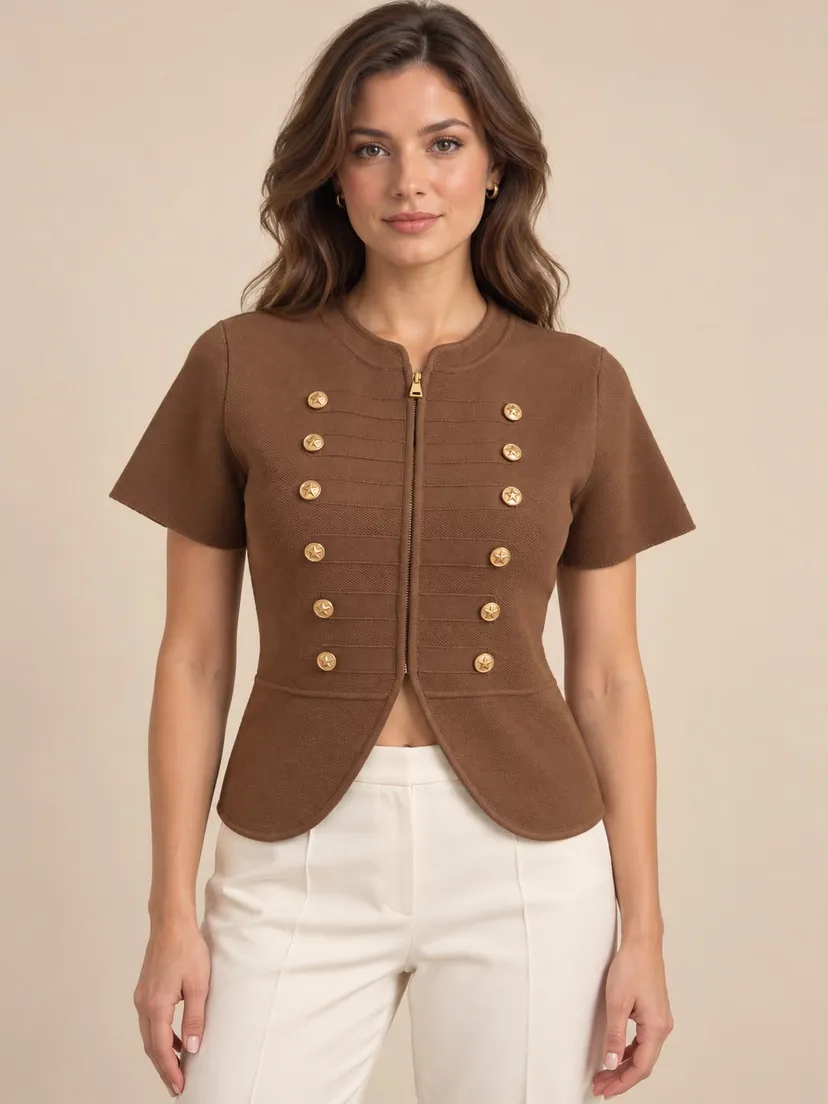
Consider teaming a Military Gold Button Short Sleeve Knit Top with Military Pleated Wide Leg Trousers for a coordinated evening look that feels special yet comfortable. The wool’s natural breathability stops you overheating even in warm venues.
Choosing Regenerative Wool Knitwear
Look for transparent supply chains that mention British or UK wool and, where possible, regenerative or pasture-raised credentials. Not every brand labels every batch, so focus on fibre content (100% wool or wool dominant blends) and country of origin. Feel the fabric: regenerative wool often has a smoother hand and less vegetable matter.
- Check for certifications such as Responsible Wool Standard alongside regenerative claims.
- Examine construction: look for reinforced seams at stress points and neat finishing that prevents fraying.
- Consider weight: mid-weight knits offer versatility from early autumn through to spring evenings.
Our Knitwear collection uses carefully chosen fibres that balance performance and comfort. Many styles work equally well dressed up with a Sweetheart Neck Long Sleeve Corset Top layered beneath or worn alone with statement jewellery.
Caring for Your Wool Knitwear
Good wool deserves proper care so it lasts for years of evenings out. Hand wash in lukewarm water using a wool-specific detergent, gently squeezing rather than rubbing. Reshape while damp and dry flat away from direct heat or sunlight.
Rotate pieces so the same garment is not worn on consecutive evenings, allowing fibres to recover. Store folded, not hung, to avoid stretching. Our guide on how to store knitwear and prevent moths offers more detailed seasonal storage tips.
Spot clean small marks promptly and consider professional cleaning for heavily soiled items. With correct care, a quality wool knit can remain a favourite for many seasons.
Styling Regenerative Wool for Evening
Wool knits are remarkably versatile. A simple long-sleeve style tucked into high-waisted trousers creates a clean column of texture that flatters most figures. Add a metallic accessory or delicate necklace to catch the light. For cooler evenings, layer a fine wool knit under a structured blazer or over a slip dress.
Monochrome looks keep the focus on fabric and cut. Pair an off-white knit with black tailored pieces for definition, or go tonal with cream and ivory for a soft, luminous effect. The natural drape of good wool means these combinations feel expensive without excess ornamentation.
Visit our Sets & Co-ords to see how knit and woven textures work together, or browse New In for fresh ways to combine pieces. The aim is clothing that feels intentional, comfortable and quietly confident.
The Future of UK Wool in Fashion
As more farmers adopt regenerative practices, the quality and availability of traceable British wool should continue to improve. This supports rural communities, encourages biodiversity on pasture land and offers consumers a fibre that aligns with growing interest in lower-impact wardrobes.
Choosing garments made with this wool is one practical way to support positive change while investing in pieces that deliver lasting wear. Evening knitwear in particular benefits from the fibre’s natural properties, giving you clothing that looks considered, feels good and stands the test of time.
Shop the edit
 Military Gold Button Short Sleeve Knit Top£69.99
 Military Pleated Wide Leg Trousers£99.99
 Sweetheart Neck Long Sleeve Corset Top£89.99
Frequently asked questions
Does regenerative wool feel different to wear?
It often feels softer and less prone to itching because the fibres are finer and cleaner. The natural crimp also helps the knit hold its shape better over multiple wears.
Can I machine wash regenerative wool knitwear?
Always follow the care label. Many wool knits prefer hand washing in cool water with a wool detergent to preserve fibre integrity and prevent felting.
Style notes from the DENISA team. Fit, fabric and care vary by piece, so always check the product page and the care label. Back to the DENISA blog.