
How to Remove Non-Alcoholic Drink Stains from Pale Party Knits
By the DENISA teamPublished 5 min read
Quick answer
- Blot immediately with a clean cloth, working from the outside in.
- Use a mild wool detergent solution for protein-based stains like cranberry.
- Rinse with cool water and reshape while damp; never rub or wring.
- Test any treatment on an inconspicuous area first.
Non-alcoholic drink stains on pale party knits are common during the festive season, especially with cranberry mocktails and warm mulled spice drinks served at Christmas 2026 gatherings. Quick action and the right gentle techniques can lift most spills from cream or pastel knits without causing shrinkage, stretching or colour loss.
Prevention starts with choosing practical styles and treating fabrics before wear, while removal relies on blotting, mild solutions and proper drying. This guide offers specific steps for festive non-alcoholic stains so your favourite knits stay looking their best through New Year’s Eve 2026 and beyond.
Prevention Before the Party
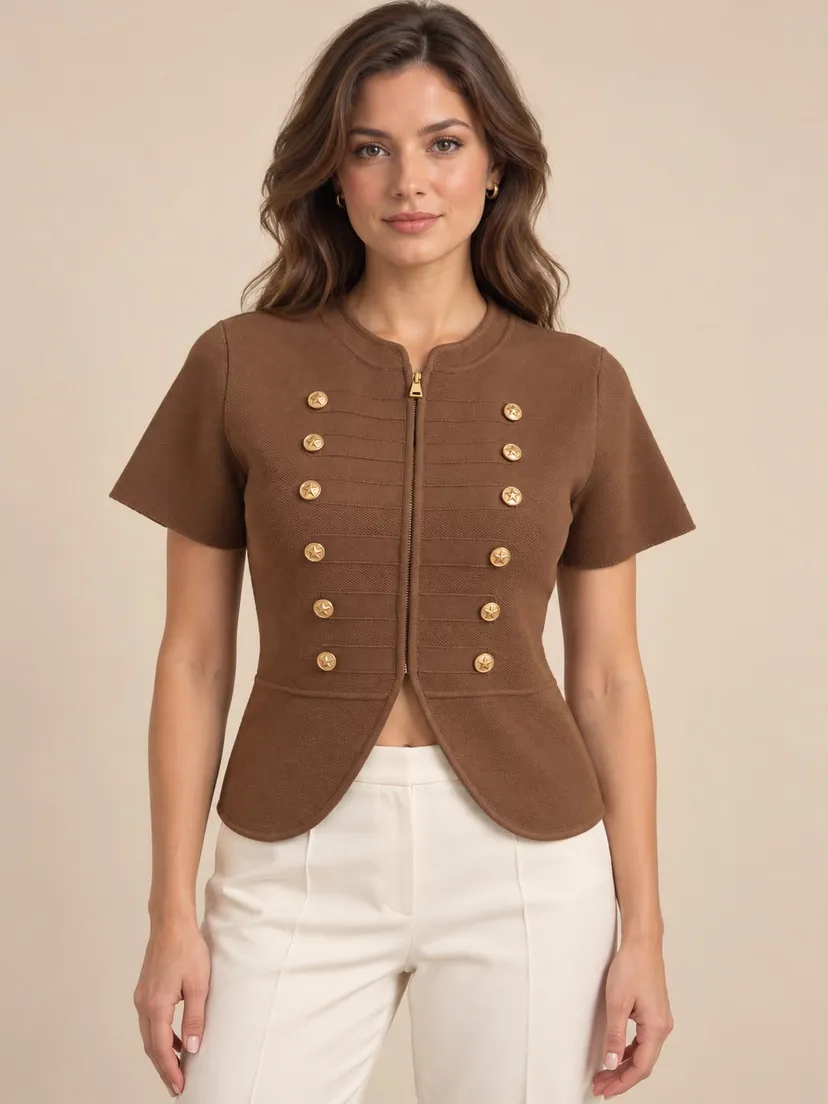
Light-coloured knits show every drop, so a few habits reduce risk. Choose styles with some structure that sit away from the spill zone, such as our Military Gold Button Short Sleeve Knit Top which offers a neat fit that keeps fabric further from the table edge. Apply a fabric protector spray designed for wool and synthetics the day before wearing; allow it to dry completely.
Wear an inconspicuous bib-style napkin or tuck a dark linen napkin into your collar when seated for long meals. Keep a small packet of absorbent wipes in your bag. For co-ord looks, our Sets & Co-ords let you remove the jacket if a spill lands only on one piece.
Immediate Action for Fresh Spills
As soon as a spill happens, blot rather than rub. Use a clean, dry white cloth or paper towel. Press gently from the outer edges of the stain towards the centre to stop it spreading. Lift any solid particles with the edge of a spoon or blunt knife before they set.
Do not pour water directly onto the knit. Instead, take the garment to a sink and hold the stained area under a gentle stream of cool water from the reverse side. This pushes the liquid out rather than driving it deeper. Continue until the water runs clear.
Tackling Cranberry Juice and Mocktail Stains
Cranberry-based drinks contain pigments and acids that bond quickly with fibres. After blotting and flushing with cool water, mix one teaspoon of gentle wool detergent with half a cup of cool water. Dip a clean cloth in the solution and dab the stain from the back.
For persistent colour, try a solution of one part white vinegar to three parts cool water. Test first on an inside seam. Dab, leave for five minutes, then rinse thoroughly. Never use hot water or bleach on pale knits. Our Pink Collared Sleeveless Knit Dress in a soft shade benefits from this careful approach because the colour is delicate.
When to Skip Enzymes
Many enzyme stain removers target protein but can damage wool or cashmere blends. Stick to pH-neutral wool detergent or the vinegar mix for safety. If the knit contains only synthetic fibres, an oxygen-based non-chlorine bleach diluted in cool water may be used after testing.
Removing Mulled Spice and Cinnamon Stains
Mulled spice drinks leave tannin and spice oil marks. Begin with the same blotting and cool-water flush. Follow with a paste of bicarbonate of soda and cool water applied to the stain. Leave for ten minutes, brush off gently, then wash the area with wool detergent solution.
Spice oils can linger, so a second treatment with a drop of colourless dish soap (the kind used for hand-washing delicates) mixed with the detergent sometimes helps. Rinse well and lay flat to dry. Check our guide to how to wash knitwear for full instructions on reshaping after treatment.
Drying and Reshaping Without Damage
Never wring or twist a knit. Gently squeeze out excess water by rolling the garment in a clean white towel. Lay it flat on a dry towel, reshape to original measurements, and leave to air dry away from direct heat or sunlight. For roll necks or structured sleeves, use clean dry towels rolled inside to maintain shape.
Once completely dry, inspect the area. If a faint mark remains, repeat the treatment before the fabric sets. Regular care after Christmas parties helps; see our Fabric Care Finder for specific fibre advice.
When to Seek Professional Cleaning
Very delicate or heavily embellished knits, such as those with metallic threads like our Metallic Appliqué Long Sleeve Top, are best taken to a reputable dry cleaner experienced with wool. Mention the exact spill type so they choose the right solvent. Early professional treatment gives the best chance of complete removal.
Store cleaned knits properly to avoid new problems before the next party. Our Knitwear range rewards careful handling, keeping pieces like the Military Gold Button Short Sleeve Knit Top looking sharp from one Christmas to the next.
Fabric-Specific Tips for Pale Party Knits
Pure wool and wool blends respond best to minimal water and neutral pH cleaners. Cashmere needs even lighter touch; use only the detergent solution and never vinegar. Cotton-blend knits tolerate slightly warmer (but still cool) water for rinsing. Always read the care label first.
Prevention and prompt action remain your strongest tools. With these targeted methods, a spilled festive mocktail need not ruin your favourite pale party knit.
Shop the edit
 Military Gold Button Short Sleeve Knit Top£69.99
 Pink Collared Sleeveless Knit Dress£59.99
 Metallic Appliqué Long Sleeve Top£49.99
Frequently asked questions
Can I machine wash a knit after treating a non-alcoholic stain?
Only if the care label allows it and you use a wool cycle with mild detergent. Hand washing is safer for most party knits after spot treatment.
Will mulled spice stains come out of cream knitwear?
They can if treated quickly with a gentle enzyme-free method. Older or set stains may need professional dry cleaning.
Style notes from the DENISA team. Fit, fabric and care vary by piece, so always check the product page and the care label. Back to the DENISA blog.