
What is satin?
By the DENISA teamPublished 2 min read
Quick answer
- Satin is a weave, not a fibre: long threads float over the surface, giving the sheen.
- It can be made from silk, polyester, acetate, viscose or blends.
- Shiny on the face, dull on the back.
- It drapes beautifully, but shows creases and water marks easily.
Satin is one of the most recognisable evening fabrics: liquid sheen, fluid drape, a cool hand. But the word describes how the fabric is woven, not what it is made of.
How satin is woven
In a satin weave, each thread passes over four or more threads before going under one. Those long "floats" lie flat and reflect light, which is where the sheen comes from. Fewer interlacings also make satin smooth and drapey, but more prone to snagging.
What satin is made from
| Fibre | Character |
|---|---|
| Silk | The original; soft, breathable, expensive |
| Polyester | Durable, holds colour, less breathable |
| Acetate | High sheen, often used for linings |
| Viscose | Soft drape, can shrink when wet |
| Blends with elastane | Stretch satin, more forgiving fit |
Always check the composition label. "Satin" alone tells you the finish, not the fibre. See satin vs silk.
Satin relatives
- Charmeuse: a lightweight satin with a soft drape, often used for slip dresses.
- Duchess satin: heavy, stiff and very lustrous; common in bridal wear.
- Sateen: a satin-like weave using cotton, with a softer sheen.
- Crêpe-back satin: shiny on one side, textured crêpe on the other.
Wearing satin
Satin skims and highlights curves. Bias-cut satin clings more; ruched or draped satin is more forgiving because the gathers break up the surface. Smooth underwear helps.
Satin at DENISA
DENISA's satin pieces include the Lace Corset Draped Satin Midi Dress, the Lace Yoke Satin Wrap Dress and the Off-Shoulder Padlock Satin Mini Dress. DENISA does not list the fibre content for these, so check the label or email denisa@denisa.net before washing.
 Lace Corset Draped Satin Midi Dress£300.00
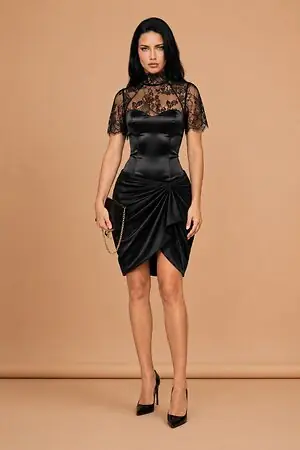 Lace Yoke Satin Wrap Dress£249.99
 Off-Shoulder Padlock Satin Mini Dress£199.99
Frequently asked questions
Is satin a natural or synthetic fabric?
Neither by definition. Satin is a weave that can be made from natural fibres (silk) or synthetic ones (polyester, acetate).
Why does satin crease so easily?
The long, smooth floats in a satin weave show every fold. Steam, rather than a hot iron, removes creases most safely.
General styling and garment advice from DENISA. Fit, fabric and care vary by piece, so always check the product page and the care label. Questions about a DENISA piece: denisa@denisa.net.