
How to build a sensory friendly capsule wardrobe for the office
By the DENISA teamPublished 5 min read
Quick answer
- Choose tag-free, flat-seam garments in soft knits, smooth satins and suede-effect fabrics.
- Prioritise wide-leg trousers and relaxed blazers that allow movement without pressure.
- Build around versatile pieces like corset tops and knit dresses that layer comfortably.
- Test fabrics by touch and limit metal hardware near the skin.
A sensory friendly capsule wardrobe removes the daily friction many neurodivergent women face with clothing. By selecting only garments with soft seams, tag-free finishes, non-itchy fabrics and comfortable constructions, you can create outfits that support focus and confidence in professional settings rather than distracting from it.
This approach works because it narrows choices to pieces that feel good all day while still meeting workplace expectations. The key is to test textures directly, understand your personal triggers and build slowly around reliable basics that mix easily.
Understand Your Sensory Triggers First
Before shopping, spend time noting what bothers you. Common issues include scratchy wool, raised seams, tight waistbands, rustling fabrics, visible tags and metal zips or buttons against the skin. Keep a short list on your phone so each purchase decision becomes quicker and more accurate.
Many women find that natural fibres like soft cotton or modal work best, but some prefer smooth synthetics that do not cling or pill. Temperature regulation also matters; breathable fabrics prevent the discomfort of feeling too hot or cold in meetings.
Choose Fabrics That Feel Calm
Look for matte, smooth surfaces rather than anything heavily textured. Suede-effect fabrics offer a soft hand-feel without the drag of real suede. Knitwear should be fine-gauge rather than chunky to avoid bulk that can feel oppressive.
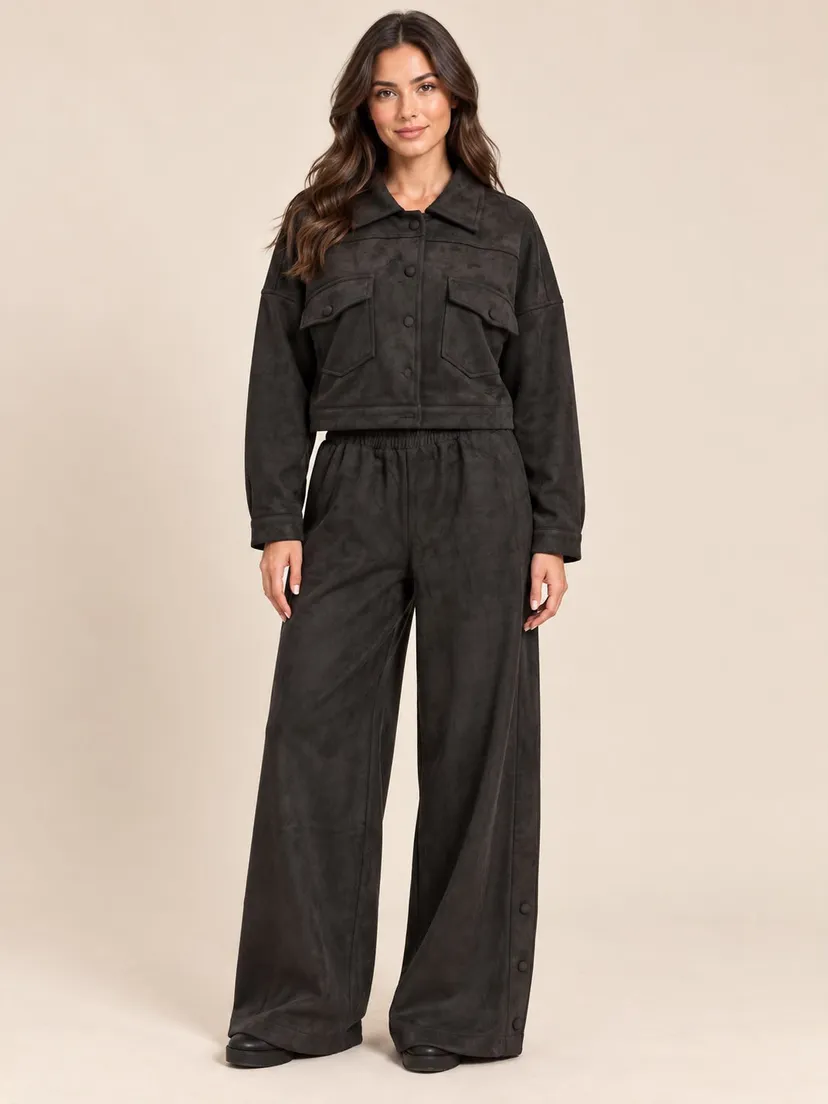
Avoid anything labelled wool or mohair unless it is blended with silk or cashmere alternatives that have been tested. Satin and certain mesh constructions can feel surprisingly gentle if the edges are finished well. The Black Suede-Effect Two-Piece Trouser Set is one example where the fabric feels plush yet looks sharp enough for the office.
Seams and Construction Matter
Flat seams or bonded edges reduce irritation at the shoulders, underarms and waist. French seams or covered overlocks are preferable to raw edges. Many sensory friendly options now use tagless heat-transfer labels or simply print care information inside.
Choose silhouettes with some ease rather than tight tailoring. Wide legs, soft pleats and relaxed shoulders allow movement without constant readjustment. Corsetry can work if it is lightly boned and lined smoothly rather than rigid.
Build Professional Basics That Layer
Start with three core bottoms that feel good sitting or standing for long periods. Wide-leg trousers in soft suede-effect or smooth crepe move quietly and do not cling. Pair them with simple tops that tuck neatly without bunching.
A soft knit dress offers an instant outfit when you need to reduce decision fatigue. The Pink Collared Sleeveless Knit Dress provides structure through its collar while the knit fabric flexes with you. Add a blazer when formality is required.
Knit tops with minimal detailing work under jackets. The Military Gold Button Short Sleeve Knit Top adds interest through buttons placed on the exterior, keeping the inside smooth and tag-free.
Layering Strategies for Changing Environments
Offices often swing between freezing air conditioning and overheated meeting rooms. A lightweight blazer that feels soft inside makes a practical layer. The Asymmetric Lace Hem Blazer has a clean interior with the decorative lace kept to the hem so it does not touch skin where it might irritate.
Long-sleeve tops under sleeveless dresses or pinafores create a buffer layer. Corset-style tops can be worn over soft base layers if the boning is covered. This modular approach means one capsule serves both winter layering and summer breathability.
Your Sensory Shopping Checklist
- Run fingers along every internal seam and hem before buying.
- Check for tags, stickers or printed labels that could rub.
- Try sitting, standing and reaching in the fitting room for at least two minutes.
- Ask for fabric swatches when buying online to test at home.
- Choose neutral colours that mix across your existing pieces.
- Limit hardware; covered buttons or magnetic fastenings can be kinder.
Focus first on pieces you wear closest to the skin. Once those feel comfortable, outer layers become easier to add. Revisit your capsule every season and retire anything that no longer meets your standards.
Adapting for Different Professional Settings
In formal offices, combine a soft knit top with wide-leg trousers and a relaxed blazer. For creative environments, a knit dress with a lace-detail jacket offers personality without sensory cost. Evening events after work can use the same base pieces with different accessories.
Our Jackets & Blazers range includes styles with soft linings and minimal internal structure. The Tops selection features many options with clean finishes that work under tailoring.
Read our existing guide on how to build a capsule wardrobe that includes evenings for more ideas on mixing day-to-night pieces that stay comfortable.
Maintenance Tips to Preserve Comfort
Wash new garments before wearing to remove any manufacturing residues. Use a gentle detergent and avoid fabric softeners that can leave a coating. Air dry where possible to prevent shrinkage that tightens seams.
Check care labels honestly. Some smooth fabrics need cool washes to stay soft. Rotate pieces so none are over-worn in areas that could pill or fray. A capsule of ten to twelve truly comfortable items will last longer because you actually enjoy wearing them.
Over time this careful editing creates a wardrobe that supports your nervous system rather than battles it. The result is clothing that lets you focus on your work, your ideas and your day instead of constant readjustments or discomfort.
Shop the edit
 Black Suede-Effect Two-Piece Trouser Set£109.99
 Asymmetric Lace Hem Blazer£99.99
 Pink Collared Sleeveless Knit Dress£59.99
 Military Gold Button Short Sleeve Knit Top£69.99
Frequently asked questions
Can sensory friendly clothes still look professional?
Yes. Soft knits with military details, smooth suede-effect sets and lace-trimmed blazers offer polish while keeping seams and textures gentle against the skin.
How do I check if a garment will irritate my skin?
Feel all internal seams and hems in store if possible. Look for flat seams, no tags and smooth linings. Start with natural or soft synthetic blends that have some stretch.
Style notes from the DENISA team. Fit, fabric and care vary by piece, so always check the product page and the care label. Back to the DENISA blog.