
How to Prevent Shoulder Divots in Heavy Knitwear
By the DENISA teamPublished 6 min read
Quick answer
- Use wide-shouldered or padded hangers instead of wire or thin plastic ones
- Fold heavy knits rather than hanging them long-term
- Store folded pieces in cool, dry drawers or shelves away from direct heat
- Rotate wear and reshape after washing to maintain structure
Shoulder divots appear when the weight of heavy knitwear pulls down on a narrow hanger, creating permanent indentations at the shoulder seams. To stop them, choose wide or padded hangers for short-term hanging, fold garments for longer storage, and keep them in cool, dry conditions that suit UK homes where damp and fluctuating temperatures are common.
Heavy knits such as cable designs or roll necks are particularly vulnerable because their dense construction has more downward pull. A few simple changes to how you store them can keep shoulders smooth and the shape intact for seasons to come.
Why Shoulder Divots Form in Heavy Knitwear
Knit fabric is made of interlocking loops that stretch easily under gravity. When a jumper or knit dress hangs for weeks on a thin hanger, the loops at the shoulder edge elongate and set into a dent. This is more noticeable in heavier weights because they pull harder. Central heating, damp wardrobes and over-crowded rails make the problem worse by softening fibres or adding extra weight when garments are layered.
In Britain many of us store winter layers from October through to April, so the risk is high. The clocks going back at the end of October often marks the moment we reach for thicker knits and store them for months at a time.
Choose the Right Hangers for Knitwear
Wire hangers from dry cleaners or narrow plastic ones are the worst culprits. Instead look for wooden hangers with wide, rounded shoulders or padded fabric versions that distribute weight evenly. The shoulder edge should be at least four centimetres across so the knit does not crease over a sharp line.
For occasional hanging, such as when an outfit is planned for the next day, these wider hangers work well. Never hang wet or freshly steamed knits; moisture makes the fabric heavier and more likely to stretch. If your wardrobe rail is crowded, consider adding a second lower rail or using a freestanding rack to give each piece breathing space.
When you need structure for a layered look, try placing a lightweight knit over a jacket or blazer that already sits on a solid hanger. The structured shoulder underneath supports the knit without creating pressure points.
Folding Techniques That Protect Shoulders
Folding is the safest long-term option for heavy knitwear. Lay the garment face down on a flat surface. Fold the sleeves neatly across the back in a straight line from shoulder to cuff, then fold the body in thirds from the hem upwards so the shoulders are not compressed at the bottom of a pile.
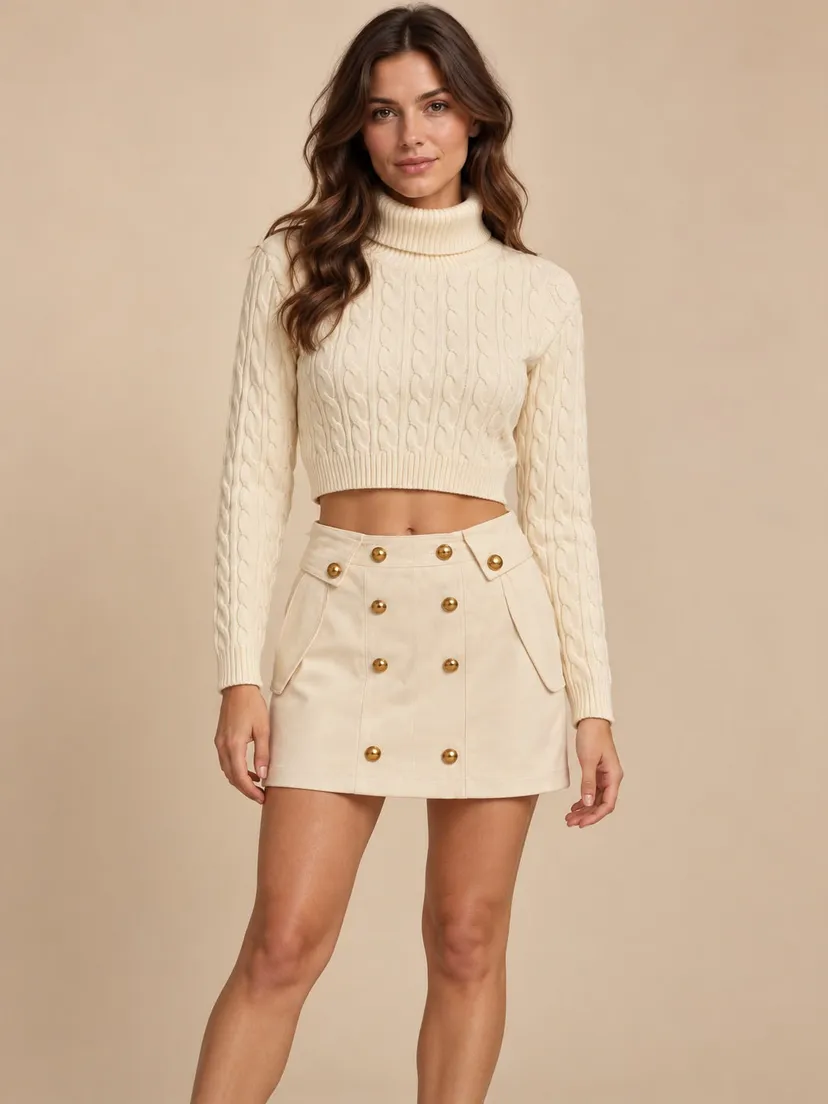
For roll necks or cropped styles like our Cropped Cable Knit Roll Neck Jumper, fold the neck area last and place a sheet of acid-free tissue inside the roll to help it keep its shape. Avoid folding at the exact shoulder seam; instead fold slightly below it so the weight rests on the smoother chest area.
Store folded knits in wide, shallow drawers or on open shelves rather than deep boxes where they can be crushed. If you use a chest of drawers, line it with cotton sheets to absorb any residual moisture common in UK bedrooms.
Storage Solutions for UK Wardrobes
British homes often have older built-in wardrobes with limited ventilation, so moisture can build up. Use breathable cotton storage bags or canvas cubes instead of plastic ones that trap humidity. Place cedar blocks or dried lavender sachets inside to deter moths without chemicals.
Keep heavy knits away from radiators and direct sunlight, both of which weaken fibres and encourage stretching. A cool landing cupboard or the top of a wardrobe (if it is not above a heat source) can be ideal. Stack no more than three garments high to prevent the bottom pieces from bearing too much weight.
For smaller spaces, vacuum storage bags are useful for out-of-season pieces, but only after the knit is completely dry and with the bag left slightly open for a day every few months to allow air circulation. Our guide on how to store knitwear and prevent moths gives more detail on protecting your collection year-round.
Daily Care Habits to Avoid Divots
Take knits off by pulling from the waist rather than tugging at the shoulders. This stops distortion at the very point you are trying to protect. After wearing, lay the piece flat for an hour before storing so any stretched areas can relax back into shape.
Rotate your favourite pieces. If you wear the same heavy knit every week, the shoulders get repeated stress. Having two or three options means each has recovery time. Our knitwear collection includes several weights and styles so you can alternate without repeating the same silhouette.
When dressing up a simple knit, layer it under a structured piece rather than hanging the knit itself. A Military Gold Button Short Sleeve Knit Top looks polished slipped inside a tailored blazer on a proper hanger, keeping the knit’s shoulders smooth.
Washing and Reshaping to Maintain Shape
Improper washing can soften fibres and make divots more likely. Follow the care advice in our how to wash knitwear guide: use cool water, a wool detergent and never wring or hang to dry. Lay flat on an absorbent towel, gently pulling the shoulders and sides back to their original measurements while damp.
Once dry, fold immediately using the techniques above. A quick steam on a low setting while the garment is laid flat can ease minor shoulder marks before they set. Avoid ironing directly on knits as the heat and pressure create new problems.
Layering with Structured Pieces for Support
One of the easiest ways to wear heavy knits without risking divots is to layer them with pieces that hold their own shape. A fine knit dress looks neat under a blazer that carries the weight of the outer layer. Similarly, a roll-neck jumper sits beautifully beneath a structured jacket rather than on its own hanger.
This approach also fits the British climate where we often need extra warmth but still want a polished silhouette. Pairing knits with our tailored trousers or co-ords creates complete outfits that look considered without extra hanging time for the knit itself.
By combining these storage habits with thoughtful layering, your heavy knitwear can stay in good condition for years, keeping shoulders neat and the overall shape you loved when you first bought it.
Shop the edit


Frequently asked questions
Can I hang knitwear if I use the right hanger?
Only very lightweight knits can be hung safely on broad, rounded wooden or padded hangers. Heavy styles like cable knits or roll necks will still stretch at the shoulders over time.
How do I remove existing shoulder divots?
Gently steam the area while laying flat, then reshape by hand. For stubborn marks, dampen and lay the garment flat to dry after light stretching.
Style notes from the DENISA team. Fit, fabric and care vary by piece, so always check the product page and the care label. Back to the DENISA blog.