
How to Find the Right Ponytail Height for High-Neck Knitwear
By the DENISA teamPublished 5 min read
Quick answer
- For turtlenecks aim for a ponytail base 7-9 cm above the nape to create neck length.
- High funnel necks work best with mid-height tails set 10-12 cm up from the hairline.
- Avoid low ponytails that sit inside the collar as they shorten the silhouette.
- Test the height with your chosen knit on before securing to check the balance.
The ideal ponytail height for high-neck knitwear sits 7-12 cm above the nape of the neck, depending on the exact collar style. This measurement creates the illusion of a longer neck while keeping the ponytail clear of the fabric so both hair and knit remain visible and flattering.
Positioning is everything when you wear pieces such as roll necks or funnel collars. Too low and the tail disappears into the knit; too high and the look can feel disconnected from the neckline. The following guide gives precise steps to find the right spot every time.
Why Ponytail Height Matters with High Collars
A high-neck knit draws attention to the area between your jaw and shoulders. A ponytail that starts inside or directly against the collar compresses this space visually and can make the neck appear shorter. Lifting the tail slightly above the collar line adds vertical emphasis and balances the outfit. This principle works across different textures, from chunky cable knits to finer military rib styles.
Measuring Your Ideal Ponytail Height
Start with your hair down and the chosen knit on. Use a soft tape measure or a piece of string.
- Locate the nape: the bony point at the base of your skull where the neck meets the back.
- Decide on collar type: roll necks need the tail 7-9 cm above the nape; higher funnel necks suit 10-12 cm.
- Mark the spot with your finger while looking in a mirror from the side.
- Gather hair at that exact point and secure temporarily with a clip.
- Check the side profile: the ponytail base should sit just above the top edge of the collar without pulling fabric upward.
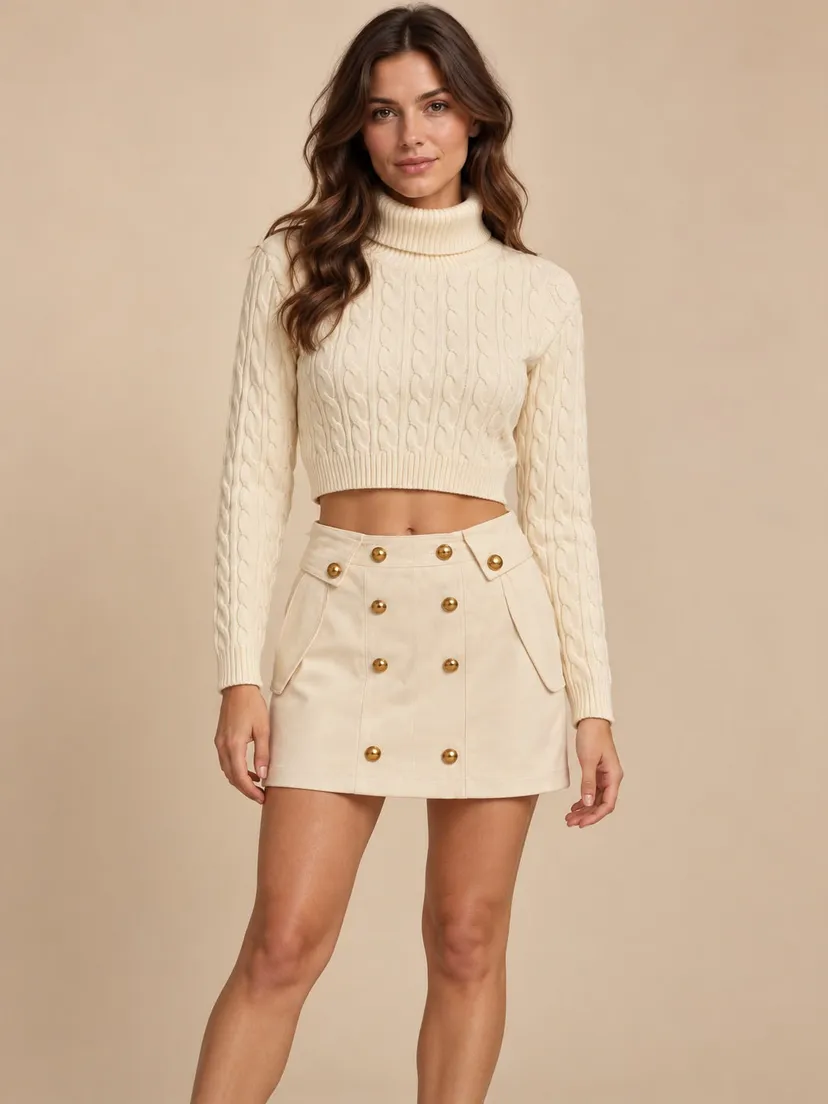
Repeat the measurement with different high-neck pieces because collar height varies. A Cropped Cable Knit Roll Neck Jumper sits closer to the neck than a full-length military zip cardigan, so the ponytail may need to be fractionally higher.
Styling by Collar Type
Turtlenecks and Roll Necks
With a classic roll neck the ponytail should clear the folded collar completely. Aim for 8 cm above the nape as a starting point. This height elongates the neck and lets the chunky texture of the knit sit cleanly against the skin. The Knitwear collection includes several styles that respond well to this placement.
Funnel and High Necks
Funnel necks rise higher and are often more structured. Position the ponytail 10-12 cm above the nape so the tail begins above the collar’s top edge. This prevents the hair from flattening the neckline and maintains the sculptural shape. The Ivory Rosette Button Draped Corset Top with its high funnel neckline is a good example where this extra height keeps proportions balanced.
Common Mistakes to Avoid
- Securing the ponytail at nape level: this hides the tail inside the knit and shortens the neck visually.
- Using the same height for every outfit: collar depth changes the required measurement.
- Over-tightening: a pulled-back base can create tension lines that emphasise the neck rather than flattering it.
- Ignoring side view: front mirror checks alone can mislead; always confirm from the side.
Pairing with Specific Denisa Styles
Certain garments in the range benefit from particular ponytail heights. The Military Gold Button Short Sleeve Knit Top has a neat neckline that looks sharp when the ponytail sits 9 cm above the nape, allowing the gold buttons to remain prominent. For evening options, an embellished style such as the Embellished Open Back Top pairs well with a slightly higher tail that showcases the back detail once you turn around.
When wearing a full look, consider how the ponytail interacts with outer layers. A Jackets & Blazers layer over a high-neck knit can change the visible collar height, so recheck the ponytail position with the complete outfit on.
Finishing Touches for a Polished Result
Once the height is correct, smooth the hair before securing. A light mist of hairspray at the crown keeps the style neat without stiffness. For added refinement, wrap a small strand of hair around the base to conceal the elastic. This detail works especially well with finer knits and creates a clean line that complements structured pieces such as military button detailing or corset-inspired seams.
Texture also plays a part. Sleek ponytails give maximum neck elongation with satin or metallic evening knits, while softer, lower-volume tails suit chunky cable styles. Always check movement: the ponytail should swing freely without catching on the collar.
Maintenance and Care for Your Knitwear
High-neck knits stay looking their best when cared for properly. Follow the advice in our guide to washing knitwear to prevent shrinking or stretching that could alter the collar fit and therefore the ideal ponytail height. Storing pieces correctly, as outlined in how to store knitwear and prevent moths, ensures the necklines remain smooth and undistorted over time.
With these measurements and a little practice you will quickly learn which height flatters each of your high-neck knits. The result is a cohesive, confident silhouette that makes both the garment and your styling choices look intentional.
Shop the edit
 Cropped Cable Knit Roll Neck Jumper£59.99
 Ivory Rosette Button Draped Corset Blouse£129.99
 Military Gold Button Short Sleeve Knit Top£69.99
Frequently asked questions
Can I wear a high ponytail with a cropped roll neck jumper?
Yes. A high ponytail placed 10-12 cm above the nape balances the cropped proportion of a roll neck jumper and draws the eye upwards.
Does ponytail height matter with military button knits?
It does. Keeping the tail above the collar line prevents the military detailing from being hidden and maintains a clean neckline.
Style notes from the DENISA team. Fit, fabric and care vary by piece, so always check the product page and the care label. Back to the DENISA blog.