
How Deadstock Fabrics Shape DENISA's 2026 Colour Palettes
By the DENISA teamPublished 6 min read
Quick answer
- Deadstock fabrics create limited seasonal colours that favour rich neutrals, soft pinks, creams and warm browns.
- Build wardrobes by mixing these tones with versatile basics like knit dresses and co-ord sets.
- Layer textures such as suede-effect, lace and military detailing for depth within the palette.
- Choose pieces that work across occasions to maximise wear from each sustainable colour.
Deadstock fabrics are the remnant rolls of luxury textiles saved from waste. At DENISA they directly influence the colours we can offer in 2026, creating palettes built around practical shades such as soft pinks, warm creams, rich browns, off-whites and deep blacks rather than trend-driven hues. This approach results in wearable, sustainable colour stories that encourage thoughtful wardrobe building instead of fleeting purchases.
By working with what is available from these remnants, we produce pieces that feel considered and timeless. The following advice explains how these limited palettes take shape and gives specific, practical ways to style and combine them for a wardrobe that works hard year after year.
What Deadstock Fabric Means for Colour Choices
Deadstock describes high-quality fabrics left over from larger production runs. Because the quantities are finite, the resulting garments come in a restrained range of colours each season. For 2026 this translates into palettes that lean on neutrals with subtle variation: warm off-whites, gentle pinks, earthy browns and versatile blacks.
These tones appear across different fabric types, from soft knits and fluid crepe to structured tweed and tactile suede-effect materials. The limitation becomes an advantage, pushing us to design pieces that coordinate easily rather than compete for attention.
Building a Base with Neutral Deadstock Tones
Start with the most versatile colours in the palette. Off-white and cream deadstock fabrics form a calm foundation that works for both day and evening. The Sleeveless Button-Front Pleated Dress in cream demonstrates this perfectly. Its clean lines and soft pleats make it suitable for garden parties, office days with a blazer, or summer evenings.
Pair this dress with outer layers in deeper tones. A brown tartan blazer adds structure and warmth without overwhelming the look. Focus on texture contrast: the smooth pleated fabric against the checked woollen surface creates interest while staying within the sustainable palette.
Layering Neutrals for Depth
Combine different neutral shades rather than wearing one head to toe. An off-white military pleated wide-leg trouser can sit under a cream knit or a soft pink top. This tonal dressing maximises the limited colours available from deadstock without looking flat.
- Choose one light neutral as your base (cream or off-white).
- Add a mid-tone such as soft pink or warm brown for interest.
- Finish with black or deep brown accessories to anchor the outfit.
Working with Soft Pink from Deadstock Rolls
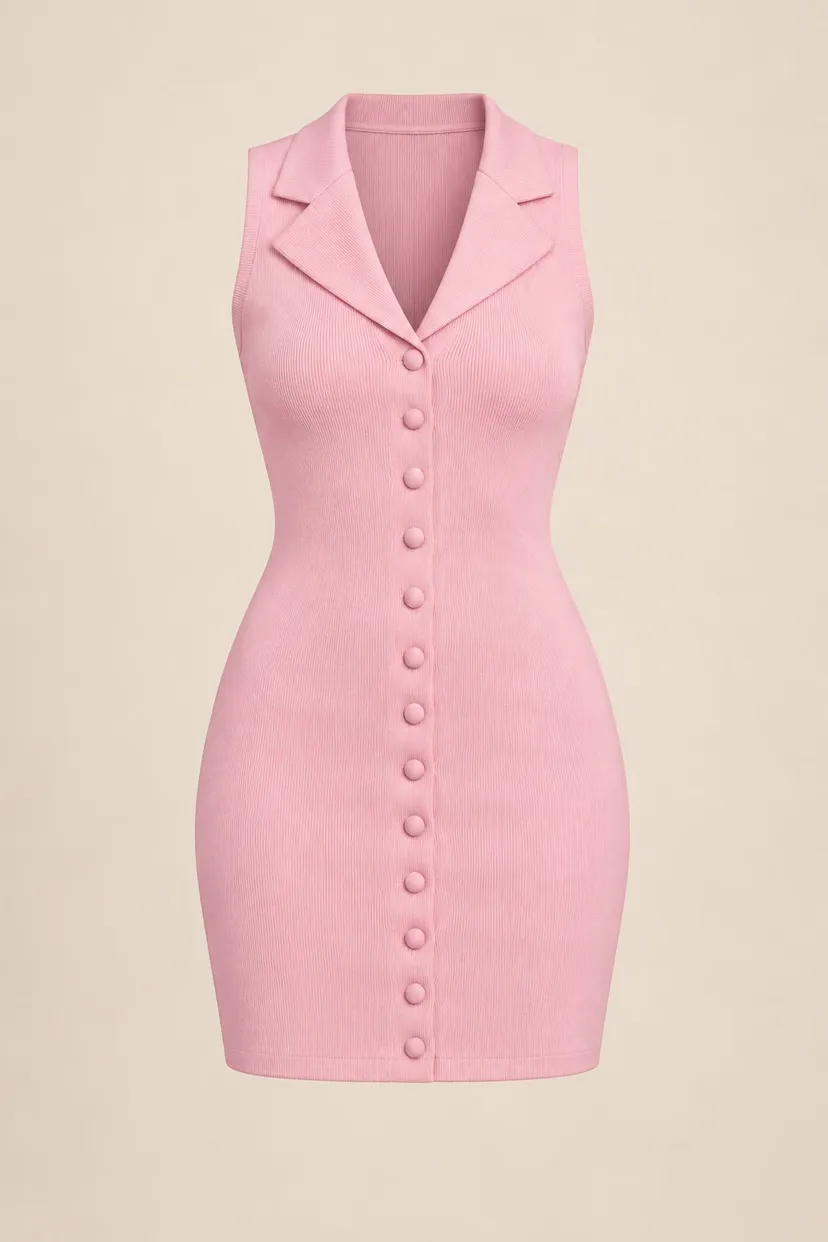
Pink appears regularly in deadstock luxury fabrics because it translates well across silk, wool and knit bases. The Pink Collared Sleeveless Knit Dress shows how this shade can feel polished rather than sweet. The neat collar gives it structure, making it easy to wear with trainers by day or heels for evening drinks.
Use pink as a bridge between warmer and cooler neutrals. It lifts an all-cream outfit or softens a black suede-effect look. Because deadstock quantities are limited, buy pieces in this colour that can be worn in multiple ways throughout the year.
Earthy Browns and Tartan in 2026 Palettes
Brown tones from remnant fabrics often arrive in checked or tweed forms, perfect for autumn and winter tailoring. The Tartan Check Peplum Blazer in rich brown demonstrates how heritage patterns gain new life when cut with a modern peplum waist. Wear it with plain wide-leg trousers in off-white or black to let the check take centre stage.
Brown works particularly well with military-inspired detailing. Pair the blazer with military pleated wide-leg trousers in off-white for balance, or layer it over a knit dress in soft pink. These combinations stay within the deadstock colour story while offering variety in silhouette and texture.
Black as the Reliable Anchor
Black deadstock fabric remains a constant because it is widely available in remnant form and endlessly practical. The Black Suede-Effect Two-Piece Trouser Set uses a soft-to-touch fabric that can be worn as a suit or separately. The top works alone with jeans or a skirt, while the trousers pair with everything from knitwear to embellished blouses.
Use black to ground brighter deadstock colours. A soft pink knit dress looks sharper with a black suede jacket thrown over it. Similarly, a cream pleated dress gains evening polish when paired with black accessories or the black suede-effect trousers.
Getting More from Co-ord Sets
Co-ord sets in deadstock fabrics stretch further when worn as separates. The black suede-effect set, for instance, gives four distinct looks: top with jeans, trousers with a white blouse, full set for events, and each piece under different outer layers.
Using Texture to Add Interest Within Limited Colours
When colour range is restricted by deadstock availability, texture becomes the main way to create visual variety. Mix smooth satins with ribbed knits, lace trims with military hardware, and fluid pleats with structured blazers. A lace-detail biker jacket in beige adds toughness to a floral-trim sleeveless top in white, while a metallic appliqué long-sleeve top brings light to an otherwise matte palette.
Consider how fabrics feel against the skin as well as how they look. Soft knits from deadstock wool feel cosy in winter, while crepe or satin remnants offer fluidity for warmer months. Our crêpe fabric guide explains the different types and their care.
Practical Wardrobe Tips for Deadstock Colours
Focus on versatility when shopping within these palettes. Choose items that work for at least three different occasions. A sleeveless knit dress can go from weekend errands to client lunches to evening events with simple changes in footwear and jewellery.
Take care of these pieces to maximise their lifespan. Deadstock fabrics are often premium quality but require specific handling. Refer to our fabric care finder for guidance on washing knits, satin, lace and more. Proper care means your sustainable wardrobe stays looking fresh for years.
Finally, use the colour undertone quiz to confirm which shades within the deadstock palette suit your skin tone best. This ensures the limited colours you do buy become true wardrobe heroes rather than items worn only occasionally.
By embracing the colours that deadstock fabrics naturally provide, you end up with a more intentional, cohesive wardrobe. The restraint creates focus, encouraging combinations that feel personal and practical rather than dictated by fleeting trends. Explore the full range in New In or browse specific categories such as Dresses, Tops and Sets & Co-ords to see how these sustainable palettes translate into wearable pieces.
Shop the edit
 Pink Collared Sleeveless Knit Dress£59.99
 Black Suede-Effect Two-Piece Trouser Set£109.99
 Sleeveless Button-Front Pleated Dress£109.99
 Tartan Check Peplum Blazer£109.99
Frequently asked questions
What is deadstock fabric?
Deadstock refers to surplus luxury textiles that would otherwise go to waste. DENISA uses these remnants to create garments, which naturally restricts and defines the colours offered each season.
How do I choose colours that suit me from limited palettes?
Use an undertone test to identify whether warm, cool or neutral shades work best for you. Then select versatile pieces in the available deadstock colours that align with your natural tones.
Style notes from the DENISA team. Fit, fabric and care vary by piece, so always check the product page and the care label. Back to the DENISA blog.