
How to Layer a Blazer Over a Knit Dress
By the DENISA teamPublished 6 min read
Quick answer
- Choose a knit dress that skims rather than clings and ends at the knee or just below.
- Select a blazer that finishes at the high hip or mid-thigh to balance the dress length.
- Layer a fine roll-neck or sleeveless top underneath if extra warmth is needed.
- Keep accessories minimal and opt for structured shoes to maintain clean lines.
Pairing a blazer with a knit dress creates a polished outfit for days when the temperature shifts between cool mornings and milder afternoons. The combination adds structure to the softness of knitwear without needing a full coat, provided you pay attention to lengths, fit and what goes between the layers.
The key is avoiding excess fabric that bunches or adds visual weight. With the right proportions you can move comfortably while the look stays clean and intentional from office meetings to weekend lunches.
Choose the Right Lengths for Balance
Length is the single biggest factor in preventing bulk. A knit dress that finishes at the knee or just below the knee gives enough coverage without pooling at the hem when a blazer sits on top. Dresses that end mid-thigh can work if the blazer is longer, but anything shorter tends to ride up and create creases underneath tailoring.
On the blazer side, aim for styles that hit at the high hip or mid-thigh. This creates a clear break between the hem of the blazer and the dress, so the eye sees two distinct pieces rather than one heavy block of fabric. A blazer that ends exactly where the dress begins often looks unintentionally bulky, especially when the dress has any stretch.
The Dress Lengths Explained guide offers more detail on how different hemlines affect overall proportions.
Adjustments for Petite and Tall Frames
If you are petite, look for a blazer that finishes no lower than the top of your thigh to keep legs looking long. The Petite Styling Guide explains how shorter outer layers help maintain balance. Tall frames can carry a slightly longer blazer, but it should still clear the widest part of the dress hem to avoid a heavy line across the legs.
Select Fitted Knits That Skim the Body
Not all knit dresses layer equally well. Choose styles with a smooth, body-skimming fit rather than oversized or heavily ribbed textures that create ridges under a blazer. Fine-gauge knits sit flatter and reduce the chance of bulk around the waist and hips.
The Pink Collared Sleeveless Knit Dress is a good example. Its neat collar adds polish while the soft knit follows the body without excess fabric. Sleeveless versions give you the option to add a thin long-sleeve layer underneath on cooler days without doubling up on sleeve bulk.
Avoid dresses with chunky cables or large ribbing on the torso if you plan to wear a fitted blazer on top. These textures tend to show through and create uneven lines. Save heavily textured knits for wearing on their own or under looser outer layers.
Layering Techniques That Add Warmth Without Weight
For transitional weather you often need one extra layer between skin and blazer. The trick is to keep that layer as flat as possible. A fine long-sleeve top or lightweight roll neck worn under the dress can add warmth without creating lumps around the neckline or arms.
Try a cropped style such as the Cropped Cable Knit Roll Neck Jumper. Because it finishes at the natural waist, it tucks neatly under both the dress and blazer without adding fabric around the midsection. Roll necks give coverage at the neck without the bulk of a scarf.
If you prefer to layer over the dress, choose an open-front cardigan in a fine knit that can be left unbuttoned so it does not compete with the blazer. The Knitwear category includes several options that work as subtle base layers.
Blazer Styles That Minimise Bulk
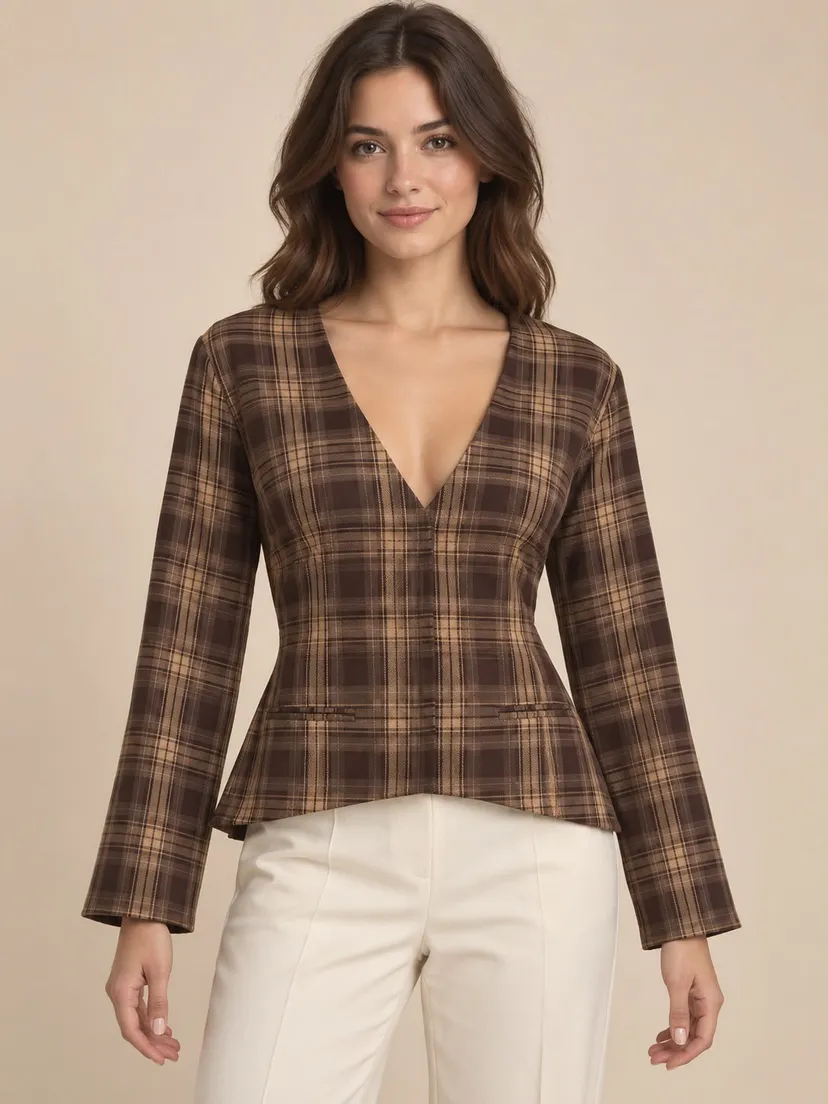
Structured but not stiff blazers perform best. Look for styles with some stretch or softer shoulders that move with the knit dress rather than sitting rigidly on top of it. Peplum shapes can be surprisingly effective because the flare starts below the waist, skimming over the dress without clinging.
The Tartan Check Peplum Blazer offers a defined waist and a hem that flares gently over the hips. The peplum detail creates a clean break rather than letting the blazer sit flat against the dress fabric. Similarly, an Asymmetric Lace Hem Blazer introduces movement at the hem so the layering does not look static or heavy.
Single-breasted styles with fewer seams tend to sit smoother than double-breasted or heavily darted designs. Avoid blazers with thick shoulder pads or heavy lining that can press into the knit and create bulk around the upper arms and back.
Use Colour and Texture for Visual Proportion
Monochrome combinations help the eye travel vertically and reduce the appearance of bulk. Wearing a dress and blazer in similar tones, or choosing a blazer only a few shades deeper than the dress, creates a streamlined column. Contrasting colours work if the blazer is short enough to break the line at a flattering point.
Texture contrast also plays a part. A smooth knit dress under a slightly textured blazer, such as one with a subtle check or lace detail, adds interest without adding physical bulk. The Jackets & Blazers category shows several styles that offer this kind of textural difference while remaining lightweight enough for layering.
Finishing Touches for a Polished Result
Accessories should reinforce clean lines. A slim belt worn over the blazer at the natural waist can define the shape and stop the outfit from looking shapeless. Choose shoes with some structure, such as pointed flats or low block heels, to balance the softness of the knit.
Keep jewellery minimal. Small earrings and a fine necklace draw attention upward and prevent the neckline from feeling crowded when a blazer collar and dress neckline sit close together. Avoid heavy scarves or thick tights that add another layer of bulk around the legs.
For days that start cold and warm up, the blazer can be removed later without the outfit losing its shape. A well-chosen knit dress on its own looks intentional rather than unfinished. The Dresses category includes many styles that transition easily between solo wear and layered looks.
Once you understand how lengths and base layers affect the final silhouette, putting together these outfits becomes straightforward. The combination of a structured blazer and soft knit dress offers comfort and polish for the changeable weeks between seasons, provided each piece is chosen to work with the other rather than fight against it.
Shop the edit
 Tartan Check Peplum Blazer£109.99
 Pink Collared Sleeveless Knit Dress£59.99
 Asymmetric Lace Hem Blazer£99.99
 Cropped Cable Knit Roll Neck Jumper£59.99
Frequently asked questions
What length blazer works best over a knit dress?
A blazer that ends at the high hip or mid-thigh creates the most balanced silhouette. Shorter styles can look boxy while longer ones risk swamping the dress.
How do I add warmth without adding bulk?
Choose fine-gauge knit dresses and layer a thin long-sleeve top or cropped jumper underneath. Avoid thick seams or heavy fabrics that create ridges under the blazer.
Style notes from the DENISA team. Fit, fabric and care vary by piece, so always check the product page and the care label. Back to the DENISA blog.