
How to Adjust Extended Shoulder Blazers for Narrower UK Shoulders
By the DENISA teamPublished 5 min read
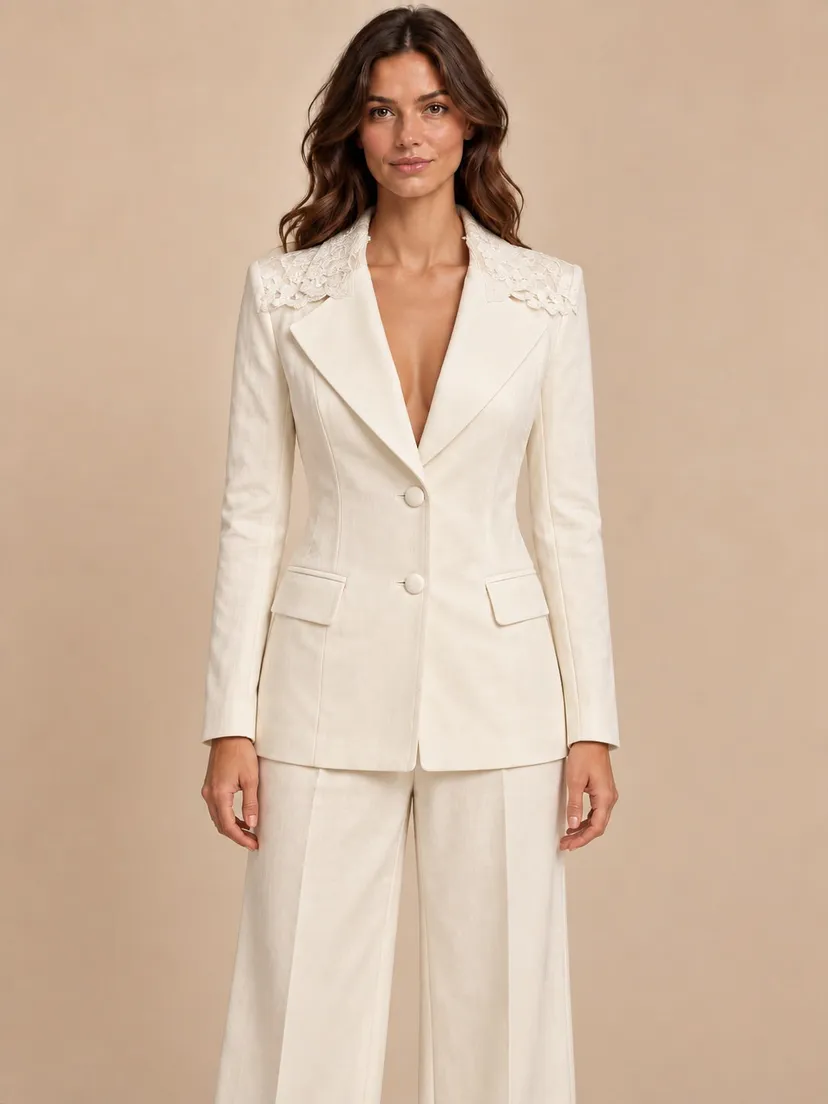
Quick answer
- Extended shoulders add drama but often need taking in at the shoulder seam for UK frames.
- A skilled tailor can adjust the sleeve head and armhole without losing the structured silhouette.
- Pair with narrower trousers or skirts to balance the proportion.
- Choose styles like the Asymmetric Lace Hem Blazer that already soften the line with lace detail.
Extended shoulder blazers are prominent in AW26 trends, bringing structure and presence to tailoring. For many women in the UK with narrower shoulders, the cut can feel overwhelming, sitting too far beyond the natural shoulder line and creating a disproportionate silhouette. The good news is that with careful tailoring adjustments these pieces can be altered to flatter British body proportions while keeping the intended sharp, feminine shape.
Understanding how to modify extended shoulder styles is useful when investing in new tailoring or adapting existing pieces. Minor changes to the shoulder seam, sleeve head and armhole can make a difference without compromising the blazer’s clean lines or structured feel. Here is practical advice on achieving a balanced fit.
Understanding the Extended Shoulder Trend for AW26
AW26 sees broader shoulders as a continuing direction, moving away from overly padded 1980s revival towards a more natural yet defined line. This creates balance when worn with narrower bottoms such as tailored trousers or straight skirts. On narrower UK frames the extension can sit beyond the natural shoulder point, which often needs softening.
The trend works well with feminine details such as lace trims or peplum hems that draw the eye downward and balance the width. Our Asymmetric Lace Hem Blazer demonstrates how a softer hemline tempers strong shoulders, making it easier to wear without heavy alteration.
Assessing Fit on Narrow UK Shoulders
Start by trying the blazer on and standing naturally in front of a full-length mirror. The shoulder seam should ideally sit at the edge of your natural shoulder. If it extends noticeably beyond, note how far. Pay attention to whether the fabric pulls across the back or whether the sleeve twists.
Common issues for UK proportions include the blazer feeling heavy on the upper body and the armhole sitting too low, which can restrict movement. A quick test is to raise your arms; if the blazer rides up excessively, the armhole and shoulder combination will benefit from adjustment.
Compare the blazer against well-fitting pieces you already own. Our guide on how a blazer should fit offers clear checkpoints for shoulders, sleeves and overall length that remain relevant when working with extended styles.
Professional Tailoring Adjustments
Take the blazer to a reputable tailor experienced in structured jackets. The most effective alteration for narrow shoulders is reducing the shoulder seam. This is done by opening the shoulder seam, trimming the excess and reattaching the sleeve with a reshaped sleeve head.
The tailor may also need to adjust the armhole depth slightly to maintain comfort. This combined approach prevents the sleeve from bunching or pulling after the shoulder is narrowed. Expect to keep some extension rather than removing it completely, as the aim is refinement rather than a complete change of silhouette.
Always ask the tailor to show you the pinned version before they cut. Styles with additional details such as the military-inspired buttons on our Tartan Check Peplum Blazer require extra care around placement during alteration.
Simple At-Home Adjustments
For minor corrections you can experiment safely at home. Pin the shoulder seams inward while wearing the blazer, marking with tailor’s chalk or removable tape. Test movement and sitting before making any cuts.
A temporary fix is to use shoulder pads or fabric inserts on the inside to fill out your natural shoulder line, effectively reducing the visual extension. This works particularly well under blazers with some stretch or softer construction.
Another option is to layer with volume on top. A Floral Trim Sleeveless Top adds subtle width at the shoulder through its shape and trim, helping the blazer sit more proportionally without permanent changes.
Balancing the Overall Silhouette
Once shoulders are adjusted, consider the full outfit. Pair an edited extended shoulder blazer with narrower bottoms to maintain clean vertical lines. Tailored trousers that skim the leg or a straight midi skirt prevent the look from becoming top-heavy.
Length matters too. A blazer that finishes at the hip bone or slightly below works best on average UK heights. If your blazer is long, ask the tailor to shorten it simultaneously with the shoulder work for a cohesive result.
Consider wearing the blazer open over a dress to break up the shoulder line. The Ivory Gold Buckle Wrap Blazer Dress offers an alternative where the blazer element is integrated, reducing the need for separate shoulder alterations while still nodding to the trend.
Fabric Choice and Construction Considerations
Heavier fabrics such as tweed or wool hold their shape better after alteration, while softer satin or knit blends may require stabilising tape along the new seams. Discuss this with your tailor based on the specific blazer.
Lined blazers are easier to alter neatly because the lining can be adjusted separately. Unlined or partially lined styles may need additional finishing work to prevent fraying after the shoulder is taken in.
For AW26 and SS27, look for blazers that combine structure with feminine touches. Lace, subtle metallics or asymmetric hems make the silhouette more wearable on narrower frames and simplify the alteration process because the eye is drawn away from the shoulder line.
Maintaining the Intended Style After Alteration
The goal is to refine rather than remove the extended shoulder character. Keep some extension beyond your natural shoulder to retain the modern shape that defines the trend. Over-narrowing can make the blazer look dated or ill-fitting in a different way.
After alteration, press the shoulders carefully. A tailor will usually steam and shape the area so the new line looks intentional. Wear the adjusted blazer with confidence, perhaps layered over one of our knitwear pieces for texture contrast that further softens the shoulder emphasis.
With these adjustments, extended shoulder blazers become practical wardrobe staples that work for both office days and occasions. The process rewards patience and a good tailor, resulting in pieces that truly fit the British frame while staying current with wider AW26 directions.
Shop the edit
 Asymmetric Lace Hem Blazer£99.99
 Tartan Check Peplum Blazer£109.99
 Ivory Gold Buckle Wrap Blazer Dress£199.99
Frequently asked questions
Can I alter extended shoulder blazers myself?
Basic pinning and simple seam adjustments are possible at home, but reshaping the shoulder and sleeve head is best left to a professional tailor to avoid distorting the fit.
Will altering the shoulders ruin the blazer style?
When done well, subtle reductions preserve the clean line and structure. The key is maintaining some extension rather than removing it entirely.
Style notes from the DENISA team. Fit, fabric and care vary by piece, so always check the product page and the care label. Back to the DENISA blog.